


Every Veterans Day, people across the country take a moment to recognize and thank those who have served in the U.S. Armed Forces. Beyond the ceremonies and expressions of gratitude, November 11 is also an opportunity to recognize the importance of veterans’ mental health.
For few veterans, the transition to civilian life brings challenges that aren’t always visible. Anxiety, depression, post-traumatic stress disorder (PTSD), sleep difficulties, and feelings of isolation can affect emotional well-being, relationships, and everyday life. Fortunately, mental health resources are available through the U.S. Department of Veterans Affairs (VA), Vet Centers, community programs, and private mental health providers.
If you are a veteran living in Florida or supporting someone who has served, understanding these options can help you take the next step toward appropriate care.
There will be parades, flags on porches, and restaurants offering free meals to anyone who serves. All of that matters. Gratitude matters.
But many veterans come home carrying things nobody sees at a parade. Sleepless nights. A short fuse that wasn’t there before. A feeling of being out of place in a world that kept moving while they were gone. This Veterans Day, along with the thank-you, it’s worth talking openly about mental health support for veterans and where to find it.
Why Veterans’ Mental Health Deserves Attention
Military service can shape a person in ways that last long after discharge. Combat, losing friends, long deployments, military sexual trauma, and even the move back into civilian life can all affect mental health.
PTSD, depression, and anxiety are some of the most common struggles some veterans face. Some also deal with substance use, chronic pain, or moral injury, which is the heavy guilt that can come from things they saw or did in service. Not every veteran experiences mental health difficulties, and each person’s experience is different. Recognizing potential challenges and knowing when to seek support can make an important difference.
Signs It Might Be Time to Reach Out
You don’t have to wait until mental health challenges become overwhelming to seek support. Some signs that it may be helpful to speak with a mental health professional include:
- Nightmares, flashbacks, or trouble sleeping.
- Feeling on edge, jumpy, or always on guard.
- Pulling away from family, friends, or things you used to enjoy.
- Anger or irritability that feels hard to control.
- Drinking more to take the edge off.
- Feeling numb, hopeless, or like no one understands.
These experiences don’t necessarily indicate PTSD or another mental health condition. But, if symptoms continue or start affecting with daily life, a professional evaluation can help identify appropriate next steps.
If You Need Help Right Now: The Veterans Crisis Line
If you or a veteran you love is in crisis, don’t wait. The Veterans Crisis Line is free and confidential, and you get to decide how much you share.
- Call: Dial 988, then press 1
- Text: Send a message to 838255
- Online: Visit VeteransCrisisLine.net to chat with a responder
Family members can call too.
Military Mental Health Resources Worth Knowing
Outside of a crisis, there are plenty of places to turn for ongoing care.
VA mental health services: VA medical centers and clinics offer therapy, medication, and PTSD treatment for veterans enrolled in VA health care. Many offer video appointments, too.
Vet Centers: These community-based centers provide free, confidential readjustment counseling for eligible veterans, service members, and their families. You can call the Vet Call Center at 877-927-8387.
Military OneSource: This program offers free, confidential non-medical counseling for service members and their families and for veterans during a window of time after separation.
Nonprofit programs: Groups like Give an Hour and the Cohen Veterans Network connect veterans and families with free or low-cost mental health care. These can be a good fit if you’re looking for free counseling services for veterans outside the VA system.
Private psychiatric care: Some veterans prefer care outside the VA, whether for shorter wait times, a closer location, or simply a fresh start. Local practices can offer psychiatric evaluations, medication management, and online therapy for veterans who’d rather get care from home.
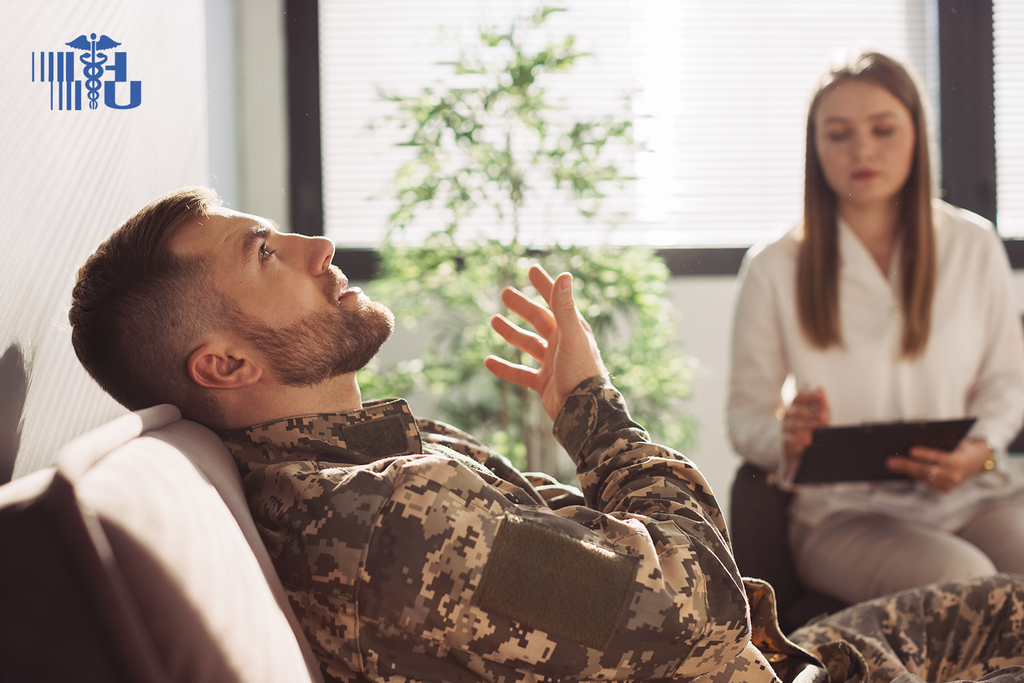
PTSD Treatment for Veterans: What Options are Available?
Uses a structured, gradual approach to help individuals process traumatic memories and reduce avoidance.
- Cognitive Processing Therapy (CPT): Helps you work through and reframe stuck thoughts about the trauma
- Prolonged Exposure (PE): Gradually helps you face memories and situations you’ve been avoiding
- Eye Movement Desensitization and Reprocessing (EMDR): Help individuals process traumatic memories through a structured therapy approach that includes bilateral stimulation, such as guided eye movements.
- Medication: Certain antidepressants can ease PTSD, anxiety, and depression symptoms, especially when paired with therapy
Peer support and group therapy also help many veterans feel less alone. Sitting with people who get it, without having to explain everything, can be powerful.
Some veterans also experience depression alongside PTSD. For individuals whose depression has not responded adequately to antidepressant treatment, Transcranial Magnetic Stimulation (TMS) may be another option to discuss with a qualified mental health provider.
Based on individual symptoms, medical history, and personal preferences, a mental health professional will identify the best-suited treatments.
How Family and Friends Can Help
Supporting a veteran starts with listening and showing you care. Give them space to talk without feeling pressured to explain everything or find a solution right away. Check in regularly, even if they say they’re doing fine.
If a veteran is hesitant to seek help, approach the conversation with patience and understanding. You do not need to have all the answers. Showing that you care and helping them explore available resources can be a meaningful first step.
Asking for Support Takes Strength
A lot of veterans were trained to push through, handle it, and not complain. That mindset got them through hard things. But when it comes to mental health, carrying it alone usually makes it heavier. Reaching out isn’t giving up. It’s a different kind of courage, and it’s often the move that changes everything.
If you or someone you care is struggling, taking the first step toward support can make a difference. You do not have to wait until difficulties become overwhelming to ask for help.
Harmony United Psychiatric Care supports adults across Florida with medication management for anxiety, depression, and PTSD symptoms, telepsychiatry for those who’d rather get care from home, and TMS therapy for depression that hasn’t responded to other treatments. You can choose in-person visits at one of our locations or connect with a provider through telepsychiatry, whichever feels right for you.
To schedule an appointment, call 800-457-4573 or submit an appointment request and take that first steady step toward feeling like yourself again.
Florida veterans can access mental health support through VA medical centers, Vet Centers, Military OneSource, nonprofit organizations, and private psychiatric providers. Services may include PTSD treatment, individual counseling, medication management, and telehealth appointments. Eligibility and costs vary by program.
PTSD treatment looks different for everyone, depending on their experiences and symptoms. Treatment may include therapies such as Cognitive Processing Therapy (CPT), Prolonged Exposure (PE), or EMDR, which help people work through traumatic experiences. Medication and peer support may also be helpful, depending on the person’s needs.
Yes. Veterans can seek mental health care through private psychiatric practices, community mental health providers, and nonprofit organizations without enrolling in VA health care. Insurance coverage, appointment availability, and treatment costs depend on the provider.
Family members can offer support by listening without judgment, checking in regularly, recognizing changes in behavior, and encouraging professional care. Helping a veteran research treatment options or arrange an appointment can also make seeking support easier.
Reference Links
https://www.va.gov/health-care/health-needs-conditions/mental-health
https://pmc.ncbi.nlm.nih.gov/articles/PMC10013222
https://www.mentalhealth.va.gov
https://www.apaf.org/library-archives/galleries/military-psychiatry-and-veterans-mental-health
Leave a Reply