

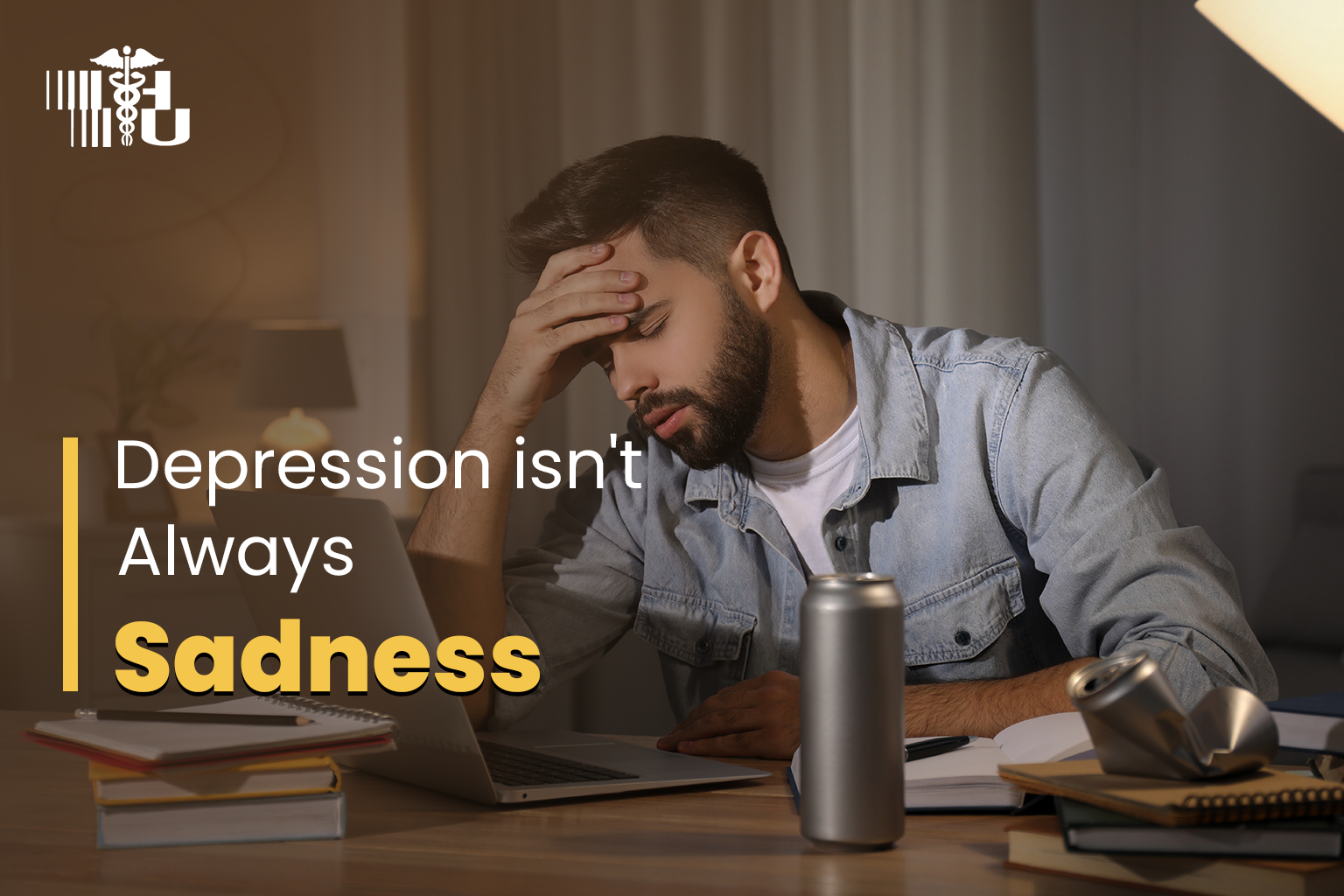
He says he’s fine, just tired. Work has been a lot lately. He doesn’t feel like going out this weekend, and the smallest things seem to set him off.
Most people wouldn’t call that depression, but in a lot of men, that’s exactly what it looks like.
We tend to picture depression as sadness: tears, a heavy mood, and someone who can’t get out of bed. For some men, depression may also show up as irritability, persistent exhaustion, increased drinking, or gradually withdrawing from friends and family. Because those signs don’t fit the picture, they get brushed off as stress or “just how he is.” That’s how so many men end up struggling for years without help.
Why Depression in Men Gets Missed
Women are diagnosed with depression more often than men. That doesn’t necessarily mean fewer men have it. It may mean we’ve been looking for the wrong signs.
The usual checklist for depression focuses on sadness, crying, and feelings of worthlessness. Many men don’t feel it that way or won’t say so if they do. When researchers add anger, risk-taking, and heavy drinking to the list, the gap between men and women nearly disappears.
The stakes are high. Men are far more likely than women to die by suicide, and untreated depression is one of the biggest risk factors. Many men are living with depression that nobody, not even the men themselves, has recognized.
Part of the problem is how men talk about it. A man might tell his doctor he’s tired, his back hurts, or he can’t sleep. He’s much less likely to say he feels hopeless or empty. So the conversation stays on the physical symptoms, and the depression underneath never gets named.
7 Warning Signs of Depression in Men
1. Anger and irritability
It’s one of the most common signs, and also one of the easiest to overlook. He snaps over little things or loses patience in traffic. Some days he just seems wound tight. For a lot of men, anger feels safer to show than sadness.
2. Fatigue and physical pain
Depression shows up in the body too. He’s tired all the time, or he keeps getting headaches, stomach trouble, or a sore back that won’t go away, and there’s no clear reason why. When physical symptoms persist without a clear explanation, a healthcare provider may also consider whether depression or another mental health condition is contributing.
3. Pulling away from people
He stops showing up for the weekly game with his friends. He hasn’t called his brother in a while, and he spends most evenings alone in the garage. It happens slowly, so it’s easy to miss until he’s already pulled away.
4. Drinking more or using substances to cope
A beer after work turns into four. Some men use alcohol, cannabis, or other substances to numb feelings they don’t know how to handle. That makes depression worse and harder to spot.
5. Escaping into work, screens, or risk
Some men bury themselves in their jobs. Others lose whole evenings to gaming, gambling, or scrolling on their phone. And some start driving too fast or taking chances they never would have before. Any of these can be a way to keep from feeling anything at all.
6. Losing interest in things he used to enjoy
Hobbies, sports, time with the kids, and sex can all start to feel like a chore. If he says “I just don’t care about that anymore” about something that used to matter to him, take note.
7. Trouble sleeping, focusing, or making decisions
He might sleep far too much, or he might be wide awake at 3 a.m. He forgets things and falls behind at work. Even small decisions start to feel like too much.

What This Can Look Like in Real Life
Picture a 46-year-old manager who keeps getting home later and later. He’s short with his wife and snaps at the kids. Most nights he falls asleep in front of the TV, and he hasn’t been to the gym in weeks. When his wife asks what’s wrong, he says, “Nothing. Work’s just crazy.” He does go to the doctor, but only about headaches and bad sleep. No one asks how he’s feeling.
No single change looks like a crisis. Together, they’re a pattern.
Depression symptoms in men over 40 can be especially easy to miss. Midlife often brings career pressure, aging parents, health changes, and kids leaving home. Low testosterone can also cause similar symptoms, so a full checkup and a mental health evaluation can help sort out what’s going on.
How to Tell If a Man is Depressed and How to Help
Pay attention to changes in his mood, behavior, or daily habits, particularly if they are unusual for him or persist for two weeks or longer. However, you don’t need to wait two weeks to seek help, especially if symptoms are severe, interfere daily life, or raise concerns about his safety.
If you’re worried about someone, these tips can make the conversation easier:
- Choose a comfortable time to talk: A casual conversation during a drive or walk may feel easier than sitting down for a serious discussion.
- Talk about what you’ve noticed: Instead of saying, “I think you’re depressed,” try something like, “You seem more tired lately, and I’ve noticed you’ve been getting frustrated easily.”
- Give him space to talk: Listen without rushing to offer advice or trying to fix everything. Sometimes, having someone who listens makes a big difference.
- Help him take the next step: Offer to look for a mental health provider, schedule an appointment, or accompany him to his first visit.
- Stay in touch: Don’t let the conversation end there. Check in from time to time and let him know you’re there if he wants to talk.
Treatment Options for Depression in Men
With the right treatment and support, men can manage depression and start feeling like themselves again.
Talk therapy
Cognitive behavioral therapy (CBT) helps men spot the thought patterns that feed depression and practice new ways to respond. Many men like that it’s structured and goal-focused, with skills to use between sessions.
Medication
Antidepressants such as SSRIs and SNRIs can ease low mood, irritability, and sleep problems. They usually take four to eight weeks to reach full effect, and the first one isn’t always the right fit. Regular check-ins with a psychiatric provider make it easier to adjust the dose or switch.
TMS therapy
Transcranial magnetic stimulation (TMS) is an FDA-cleared, noninvasive treatment that offers another option for people living with major depressive disorder who have not experienced sufficient improvement with antidepressant medication. It uses magnetic pulses to activate areas of the brain linked to mood.
Group therapy
Group therapy gives you a platform to connect with others facing similar experiences and challenges while learning coping strategies under the guidance of a licensed clinician. Virtual sessions can also make participation more convenient.
Treating alcohol or substance use too
If drinking is part of the picture, it needs attention and counseling alongside the depression. Treating one and ignoring the other rarely works.
Daily habits
Exercise, steady sleep, and time with people he trusts won’t replace treatment, but they help it work.
When to Seek Professional Help
If these changes stick around for more than two weeks, interfere with daily life or relationships, or you find yourself turning to alcohol or drugs to cope, it may be time to talk with a mental health professional.
If he talks about being a burden, says things would be better without him, or starts giving away belongings, get help right away. Call 988, the Suicide and Crisis Lifeline, or call 911 in an emergency.
Depression in Men is Treatable
Asking for help takes courage. The good news is that treatment works. Most men feel better with the right mix of therapy, medication, and support. For depression that hasn’t improved with medication, newer options like TMS therapy can help too.
If you’ve noticed some of these signs in yourself or a man you care about, you don’t have to figure it out alone.
At Harmony United Psychiatric Care, our providers help men across Florida get to the bottom of what they’re feeling and build a plan that fits their life. We offer medication management, TMS therapy for treatment-resistant depression, and a full range of mental health services, both in person and through telepsychiatry for men who’d rather start from home.
To schedule an appointment, call 800-457-4573 or submit an appointment request and take that first step toward feeling like yourself again.
Frequently Asked Questions
Men experiencing depression may become more irritable, more angry, have ongoing fatigue, sleep problems, lose interest in hobbies, withdraw socially, have difficulty concentrating, and increase alcohol or substance use. Some men may also experience unexplained physical symptoms, such as headaches or muscle pain.
Yes. Depression in men does not always show up as sadness or crying. Some men experience persistent irritability, frustration, anger, or a short temper. These changes may be mistaken for stress or personality traits, causing depression to go unrecognized.
Stress is often linked to specific situations, while depression can affect mood, energy, sleep, relationships, and interest in everyday activities even when there is no obvious trigger. If symptoms such as irritability, fatigue, withdrawal, or loss of interest persist for two weeks or longer, a professional mental health evaluation can help identify the cause.
Depression in men over 40 can be associated with work pressure, relationship difficulties, financial concerns, aging parents, health changes, and major life transitions. Hormonal changes, including low testosterone, may also cause similar symptoms. A medical checkup and mental health evaluation can help determine what is contributing to the changes.
Depression in men can be treated with several approaches, including cognitive behavioral therapy (CBT), antidepressant medication, TMS therapy, and group therapy. Treatment may also include addressing alcohol or substance use and building healthier sleep and exercise habits. A mental health professional can recommend an individualized treatment plan based on symptoms and needs.
Reference Links
https://pmc.ncbi.nlm.nih.gov/articles/PMC3038800/
https://www.nhs.uk/mental-health/conditions/depression-in-adults/symptoms
Leave a Reply