

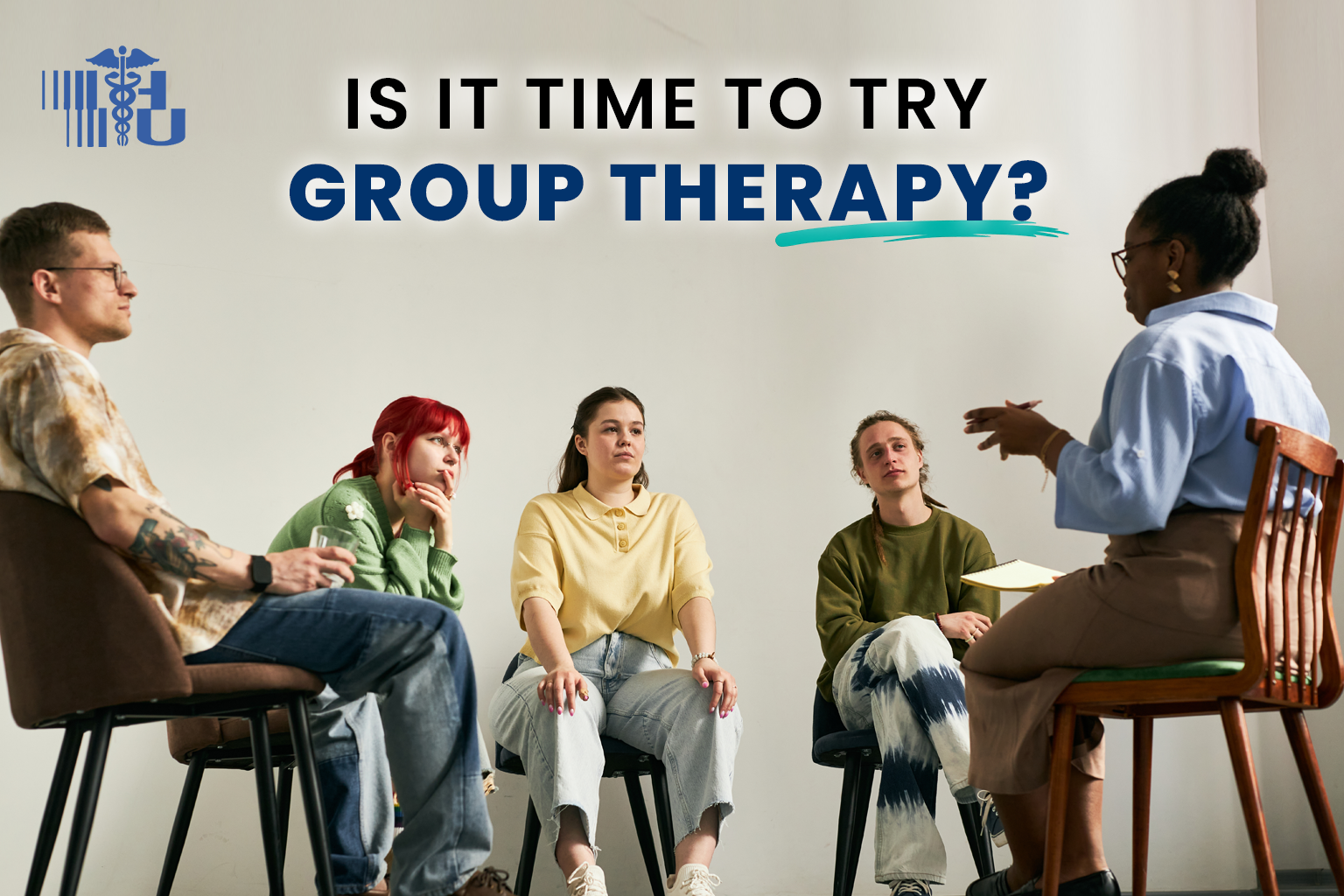
You might have thought, “Is group therapy right for me? If you’ve been feeling alone in your struggles, want to learn practical coping skills, or wish you had people who understood what you’re going through, group therapy may be worth considering. It offers a structured space to connect with others, learn from shared experiences, and work toward better mental health with guidance from a licensed clinician.
The thought of sharing your experiences with strangers may feel overwhelming, especially at first. You can take your time and share only what you feel comfortable with. Understanding when group therapy may help and when one-on-one support may be more suitable helps you make decisions about your mental health.
What is Group Therapy
A small group of people meets regularly with a licensed clinician to work through their mental health concerns together. Sessions can happen in person or online.
It’s different from a casual support group. A trained professional leads each session, keeps things on track, teaches coping skills, and makes sure everyone feels safe.
At Harmony United Psychiatric Care, groups meet online via a secure video platform, allowing Florida residents to join from home or anywhere.
Harmony United Psychiatric Care is a premier mental health clinic serving communities across Florida.
Find a provider near you
9 Signs Group Therapy May Be A Good Fit For You
1. You Feel Like Nobody Really Understands What You’re Going Through
You might have friends and family who care about you, but explaining anxiety, trauma, or overwhelming thoughts to someone who hasn’t experienced them can be difficult. Sometimes, you just want to talk to someone who gets it without having to explain every little detail.
That’s one of the things that makes group therapy different. When someone shares an experience that sounds just like yours, you may feel a little less alone. You begin to realize that other people struggle with similar thoughts and emotions, even if their circumstances are different.
2. You Learn by Listening to Other People’s Experiences
Have you ever heard someone describe a problem and thought, “I do that, too”? It can be surprisingly eye-opening.
In group therapy, other people’s stories may help you recognize patterns in your own life. You might notice how someone handles stress, sets boundaries, or responds to anxious thoughts and discover an approach you’d like to try. You’re not expected to have all the answers yourself. Sometimes, simply listening can help you see things from a different perspective.
3. You Want to Learn Practical Ways to Manage Your Emotions
Understanding why you feel anxious or overwhelmed is helpful, but knowing what to do when those feelings show up is just as important.
Group therapy can give you opportunities to learn and practice coping skills with guidance from a licensed clinician. Depending on the group, you might work on recognizing unhelpful thought patterns, managing stress, or responding differently to difficult situations.
Over time, you can use what you learn to handle daily challenges, navigate difficult conversations, and respond to uncertainty in healthier ways.
4. You’ve Tried Individual Therapy and Want to Build on What You’ve Learned
Perhaps you’ve already spent time in individual therapy understanding your emotions, identifying patterns, or working through difficult experiences. Now, you want to put those insights into practice.
Group therapy can be a helpful next step. It gives you a chance to hear different perspectives, practice communication skills, and learn how others navigate similar challenges.
You don’t necessarily have to choose between individual and group therapy, either. Depending on your needs, both can complement each other and support different parts of your mental health journey.
5. You Want Support for a Specific Mental Health Concern
Different therapy groups address different mental health concerns. Some focus on anxiety, while others help participants work through trauma, manage emotions, or develop healthier coping skills.
Choosing a group that matches your needs can make sessions more meaningful. You can learn from shared experiences, practice practical strategies, and work toward goals that matter in your daily life.
If you’re unsure which type of group would suit your needs, a mental health professional can help you explore your options.
At Harmony United, current groups include CBT for Anxiety and Trauma/PTSD.
6. The Cost or Logistics of Individual Therapy Have Been Difficult to Manage
Sometimes, getting consistent mental health support isn’t just about finding the right therapist. It’s also about fitting appointments into your schedule, managing costs, and making time to travel.
Group therapy may be a more accessible option because sessions generally cost less than individual therapy. Online groups can also make attending easier by removing the need to commute.
If you’re struggling to fit therapy into your budget or routine, group therapy may offer a more manageable alternative. Before getting started, confirm your insurance benefits and any additional expenses that are not covered under insurance with your provider.
7. You Find It Easier to Stay Consistent When You Have a Routine
Making changes to your mental health habits can be difficult when you’re trying to manage everything on your own. You might start practicing a coping technique one week, forget about it the next, and struggle to get back on track.
Regular group therapy sessions help you track your progress, reflect on your experiences, and stay focused on your mental health goals. Knowing that you have a session coming up can also encourage you to pay closer attention to the patterns you want to change.
Over time, that routine may help you stay engaged with your mental health journey.
8. You’re Willing to Show Up, Even If You’re Not Ready to Share Everything
The thought of talking about personal experiences in front of other people can feel uncomfortable. You might worry about saying the wrong thing, becoming emotional, or being judged.
It’s okay to take your time opening up. You can use your first few sessions to get comfortable with the group, listen to others, and decide when you’re ready to share your own experiences.
Being open to the experience, even when you’re nervous, can be a meaningful first step. You can gradually build confidence as you become more familiar with the group and its members.
9. You’re Ready to Work on Your Mental Health, Even If Things Aren’t Perfect
You don’t have to have everything figured out before joining group therapy. You may still experience difficult days, struggle with certain emotions, or feel uncertain about what comes next.
What matters is whether you feel able to participate and work toward your goals with the support available. If your symptoms are manageable and you’re looking to build coping skills, improve relationships, or feel more connected to others, group therapy may be a good option.
Remember: You don’t need to identify with all nine signs to consider group therapy. These are starting points to help you reflect on what you need. A talk with a mental health professional can help you decide whether group therapy, individual therapy, or a combination of both is right for you.

When Group Therapy May Not Be The Best First Step
Group therapy has real limitations, and it’s better to know them upfront:
- You’re in crisis. If you’re having thoughts of harming yourself, go to the nearest emergency room or call 988. Group therapy isn’t designed for crisis care.
- You need more individual attention right now. In a group, time is shared. If you need to work through something very personal or complex, individual therapy gives you the full hour.
- Your symptoms are severe. Before you join a group, a psychiatric evaluation can help you and your provider decide on the best next step. Sometimes that’s medication, and sometimes it’s a more intensive level of care.
- Confidentiality worries feel too big. Clinicians set clear privacy rules, and members agree to them. Still, if that concern keeps you from opening up at all, it’s worth talking through with a provider first.
- The schedule doesn’t fit. Groups meet at set times. If your week is unpredictable, individual sessions may be easier to keep.
Group Therapy vs Individual Therapy
| Factors | Group Therapy | Individual Therapy |
| Who participates? | A licensed clinician and several participants | You and your therapist |
| Personal attention | The clinician’s time is shared among group members. | The session focuses on your individual needs. |
| Learnings | You learn from other people’s experiences and perspectives. | You can explore your experiences in greater depth. |
| Main focus | Often includes shared concerns, coping skills, and interpersonal learning. | Can focus closely on personal history, symptoms, and individual goals. |
| Privacy | Group members are expected to respect confidentiality, but their behavior cannot be guaranteed. | Conversations take place privately with your therapist, subject to applicable confidentiality limits. |
| Cost | Often less expensive per session, depending on the provider and insurance | Often more expensive per session, depending on the provider and insurance |
Plenty of people use both. Individual psychotherapy and counseling can go deeper into your personal history, while group therapy helps you practice and feel less alone.
Types of Group Therapy
Not all groups work the same way. Common types include:
- Skills-based groups teach specific tools, often using CBT. For example, recognizing anxious thought patterns and practicing calmer responses.
- Trauma-focused groups help members understand trauma responses and build ways to feel safer in their bodies and relationships.
- Psychoeducational groups focus on learning about a condition, like depression, and how to manage it.
- Process groups center on relationships and what happens between members in the room.
The best option depends on your symptoms, treatment goals, and personal needs. A qualified mental health professional can choose an appropriate group. Group therapy may also complement individual psychotherapy when recommended.
What Happens in a Group Therapy Session
Here’s how a typical 60-minute online group session at Harmony United flows:
- Check-in. Each member briefly shares how their week went. You can keep it short.
- Collaborative work. The clinician guides a skill, topic, or discussion, and members share and respond.
- Reflection. The group wraps up with what each person is taking with them.
- Privacy reminder. Sessions close with a reminder that what’s shared in the group stays in the group.
Every session is led by a licensed psychiatrist, psychologist, or therapist. You join from home on a secure, HIPAA-compliant video platform.
Taking the First Step Matters
Joining a group for the first time can feel scary, even from your own couch. But if you’ve been handling anxiety, trauma, or loneliness alone for a while, being around people who understand can bring real relief. You don’t have to say it perfectly. You just have to be there.
Find The Right Group Therapy Support In Florida
If a few of these signs sound familiar and you’re searching for group therapy near me, we’re here to talk it through.
Harmony United Psychiatric Care supports people across Florida with clinician-led online group therapy, including CBT for Anxiety and Trauma/PTSD groups. We also offer individual psychotherapy and counseling, psychiatric evaluations, and medication management, with both in-person care and telepsychiatry available.
To join a group or schedule an appointment, call 800-457-4573 or book your group therapy spot, and take that first step toward feeling less alone.
Frequently Asked Questions
Group therapy may be right for you if you want to manage anxiety or depression, develop coping skills, improve relationships, or feel less alone in your struggles. It can be especially helpful if you learn from others’ experiences and feel comfortable participating in a therapist-led setting. A qualified mental health professional can decide if group therapy, individual therapy, or both would best meet your needs.
The main types of group therapy include cognitive behavioral therapy (CBT), dialectical behavior therapy (DBT) skills groups, psychoeducational groups, supportive therapy groups, interpersonal process groups, and trauma-focused groups. Some groups teach practical coping strategies, while others focus on emotional regulation, relationships, or shared mental health concerns. The right approach depends on your symptoms and treatment goals.
A typical group therapy session involves a licensed clinician guiding participants through check-ins, therapeutic discussions, coping exercises, or skill-building activities. Members may share experiences, learn from others, and reflect on their progress. You generally do not need to share everything immediately; participation expectations depend on the group’s format and clinical guidelines.
Group therapy may benefit people experiencing anxiety, depression, OCD, and trauma-related difficulties by helping them develop coping skills and learn from shared experiences. It provides opportunities to practice coping skills, receive feedback, and learn from others, while individual therapy offers more personalized attention. Neither approach is universally better; the most appropriate option depends on your needs, treatment goals, and clinical recommendations.
The benefits of group therapy include reduced feelings of isolation, improved coping skills, greater self-awareness, stronger communication skills, and opportunities to build supportive connections. Participants can learn how others manage similar challenges and practice healthier responses in a structured environment. Outcomes vary depending on the group, treatment approach, and individual needs.
Research says yes. A 2016 review of 46 clinical trials led by researcher Gary Burlingame found no difference in outcomes between group and individual therapy across multiple conditions.
Yes, Florida residents may be able to attend online group therapy through a qualified provider offering virtual sessions. Harmony United Psychiatric Care offers virtual group therapy, including CBT for Anxiety and Trauma/PTSD groups. Contact the practice at 800-457-4573 or visit the group therapy page to confirm eligibility, current group availability, scheduling, and costs.
Reference Links
https://www.ncbi.nlm.nih.gov/books/NBK549812
https://www.psychologytoday.com/us/therapy-guide/group-counseling
https://psychiatryonline.org/doi/10.1176/appi.psychotherapy.20200032
Leave a Reply