


If you’ve ever sat down to search for help and typed “therapist near me,” only to end up more confused than when you started, you’re not alone. The mental health field includes several professional titles that can look similar at first glance, and most people aren’t sure whether they need a psychiatrist, psychologist, or therapist, or how to tell the three apart. Add in questions about who can prescribe medication and who can counsel and give therapies, and it’s easy to feel stuck before you’ve even made a call.
Questions like “Who can prescribe medication?”, “Who can diagnose me?” and “Do I need therapy or a psychiatric evaluation?” can make getting started feel more complicated than it needs to be.
The good news is that the differences aren’t as complicated as they seem once you break them down by training, approach, and what each professional actually does day to day.
What is a Psychiatrist?
A psychiatrist specializes in identifying, treating, and preventing mental illnesses and has the medical authority to prescribe medication when it is appropriate. They go through four years of medical school followed by a residency focused specifically on psychiatric care, which means they’re trained to look at mental health from a biological angle as well as an emotional one. Because they hold an MD or DO, psychiatrists can prescribe and manage medication, order lab work, and rule out physical conditions that sometimes mimic psychiatric symptoms.
Most people see a psychiatrist for an initial psychiatric evaluation, especially when symptoms like depression, anxiety, bipolar disorder, or ADHD are severe enough to need medication alongside talk therapy. Ongoing medication management is one of the biggest reasons people continue seeing a psychiatrist long-term, since dosages and prescriptions often need to be adjusted over time.
Harmony United Psychiatric Care is a premier mental health clinic serving communities across Florida.
Find a provider near you
What is a Psychologist?
A psychologist typically holds a doctoral degree, either a PhD or a PsyD, and focuses on the study of behavior, thought patterns, and emotional functioning. A clinical psychologist is trained to diagnose mental health conditions through structured interviews and formal testing, which is why some psychologists offer specialized psychological or neuropsychological testing, depending on their training and practice.
Unlike psychiatrists, psychologists in most states, including Florida, cannot prescribe medication. What they bring instead is deep expertise in talk therapy, behavioral therapy, and evidence-based approaches like cognitive behavioral therapy. If a diagnosis is unclear or a child is struggling in school and the cause isn’t obvious, a psychologist’s testing can uncover what’s actually going on.
What Does a Therapist Do?
“Therapist” is a broader umbrella term that can include licensed clinical social workers, licensed mental health counselors, licensed marriage and family therapists, and psychotherapists. Their training usually involves a master’s degree plus supervised clinical hours before licensure. Therapists are the professionals most people picture when they think of ongoing counseling: weekly sessions, a consistent relationship over months or years, and a focus on coping skills, relationship patterns, and processing difficult experiences.
Therapists cannot prescribe medication either, but they’re often the entry point into care because sessions tend to be more accessible and less clinical in feel. Someone dealing with a rough patch, a major life transition, ongoing stress, emotional difficulties, or physical tension associated with stress in the body can usually start here, whether that means talking through what’s going on or approaches that incorporate awareness of physical sensations and the body’s response to stress.
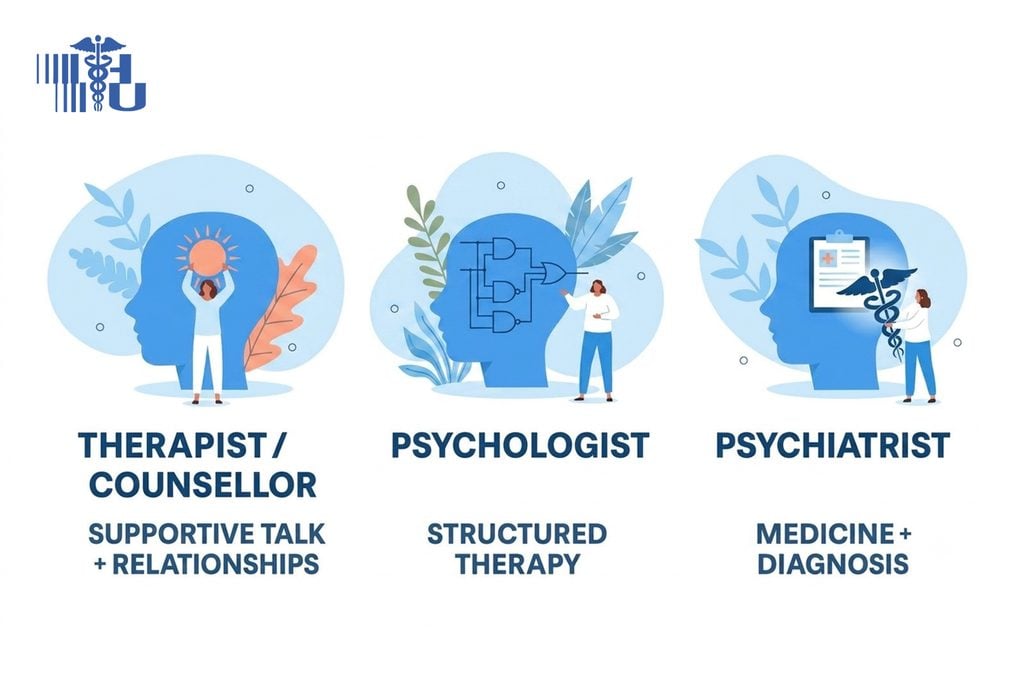
Psychiatrist vs Psychologist vs Therapist: The Core Differences
Even though all three work for the mental well-being of people, they still differ in terms of education, medication management, and therapy modalities.
| Aspect | Psychiatrist | Psychologist | Therapist |
| Degree required | Medical degree (MD or DO), plus a psychiatric residency | Doctoral degree (PhD or PsyD) in psychology | Master’s degree in counseling, social work, psychology, or marriage and family therapy |
| Typical length of training | 4 years of medical school plus 4 to 5 years of residency | 5 to 7 years of doctoral study, including supervised clinical hours | 2 to 3 years of graduate school plus supervised clinical hours before full licensure |
| Can prescribe medication | Yes, including psychiatric medications and lab work to rule out physical causes | No, in Florida or in most other states | No, in Florida or in most other states |
| Can diagnose mental health conditions | Yes | Yes, often through formal psychological or neuropsychological testing | Yes, though usually through clinical interview rather than standardized testing |
| Primary focus of care | Diagnosis, medication management, and treatment planning, often for more severe or complex symptoms | Psychological evaluation, cognitive and behavioral testing, and structured talk therapy | Ongoing talk therapy, counseling, and day-to-day coping support |
| Common reason someone sees this provider | Starting or adjusting medication for depression, anxiety, ADHD, bipolar disorder, and similar conditions | Getting a formal diagnosis, academic or cognitive testing, or working through a specific psychological concern | Processing a life transition, relationship issues, grief, or chronic stress on a weekly or biweekly basis |
So Which One Should You See?
For many people, the honest answer is more than one. It’s common to see a psychiatrist for medication and a therapist for weekly sessions at the same time, working as a team rather than separately, which is.
- If You’re Dealing with Physical or Overwhelming Symptoms
A psychiatric evaluation can help when symptoms like a racing heart, poor sleep, or trouble functioning day to day are affecting your life. Since symptoms like these can also have a medical cause, it’s worth ruling that out with your primary care provider alongside any mental health support you pursue.
- If You Want Ongoing Support and Someone to Talk To
A therapist or psychologist can offer a space to talk through stress, relationships, or a specific life event on a regular basis and help you build tools to manage what you’re going through.
- If You Need Clarity on a Diagnosis
If you or your child needs clarity on a diagnosis that’s been hard to pin down, a psychologist’s evaluation and testing can fill in the gaps that a single conversation can’t.
If you’ve been going back and forth between a psychiatrist and a psychologist and aren’t sure which door to walk through first, know that this decision doesn’t have to be perfect. A good mental health team will help you figure out the rest.
That’s exactly what Harmony United Psychiatric Care was built for. With clinics across Florida and telepsychiatry options for anyone who’d rather meet from home, Harmony connects you with the right mix of psychiatrists, psychologists, and therapists instead of leaving you to guess. Whether you need a full psychiatric evaluation, ongoing medication management, ADHD or trauma-focused therapy, or telepsychiatry so you can be seen without leaving your couch, Harmony’s team works together so your care isn’t fragmented across three different clinics.
To schedule an appointment, call 800-457-4573 or submit an appointment request and take that first step toward getting the right kind of support, not just any support.
Bottom Line
Psychologists, psychiatrists, and therapists all work toward the same basic goal: helping you get to a better place mentally and emotionally. When something in your life feels overwhelming or hard to make sense of on your own, any of these professionals can help you untangle it and start working through it.
As the goals of many of these professionals are similar, your personal needs determine which one is right for you. There are various factors that you consider when determining which kind of professional is right for you.
Frequently Asked Questions
A psychiatrist specializes in identifying, treating, and preventing mental illnesses and has the medical authority to prescribe medication when it is appropriate and treat mental illness from a biological standpoint. A psychologist holds a doctoral degree and focuses on diagnosis through testing and structured talk therapy but cannot prescribe medication. A therapist typically holds a master’s degree and provides ongoing counseling and coping support, also without prescribing privileges.
No. Therapists, including licensed counselors, social workers, and marriage and family therapists, cannot prescribe medication in Florida or most other states. Only a psychiatrist, as a medical doctor, can prescribe and manage psychiatric medication.
No. A psychiatrist specializes in identifying, treating, and preventing mental illnesses and has the medical authority to prescribe medication when it is appropriate, while a psychologist earned a doctoral degree in psychology and specializes in testing, evaluation, and talk therapy rather than medication management.
It depends on your symptoms. If you’re experiencing physical or overwhelming symptoms like panic, a racing heart, or an inability to function, a psychiatric evaluation is usually the right starting point. If you want ongoing support for stress, relationships, or a life transition, a therapist is typically the first call.
Yes, and it’s common. Many people see a psychiatrist for medication management and a therapist for regular talk therapy at the same time, with both providers working together as part of one care plan.
A psychologist is usually the right choice when you need a formal diagnosis, such as ADHD or a learning difference, or when a specific psychological concern requires structured testing rather than ongoing conversation-based therapy.
Reference Links
https://pubmed.ncbi.nlm.nih.gov/12161672
https://pmc.ncbi.nlm.nih.gov/articles/PMC3190443
https://pmc.ncbi.nlm.nih.gov/articles/PMC3410123
https://www.apa.org/ptsd-guideline/patients-and-families/psychotherapy-professionals
http://genesight.com/blog/patient/psychologist-vs-psychiatrist-vs-therapist-whats-the-difference/
Leave a Reply