

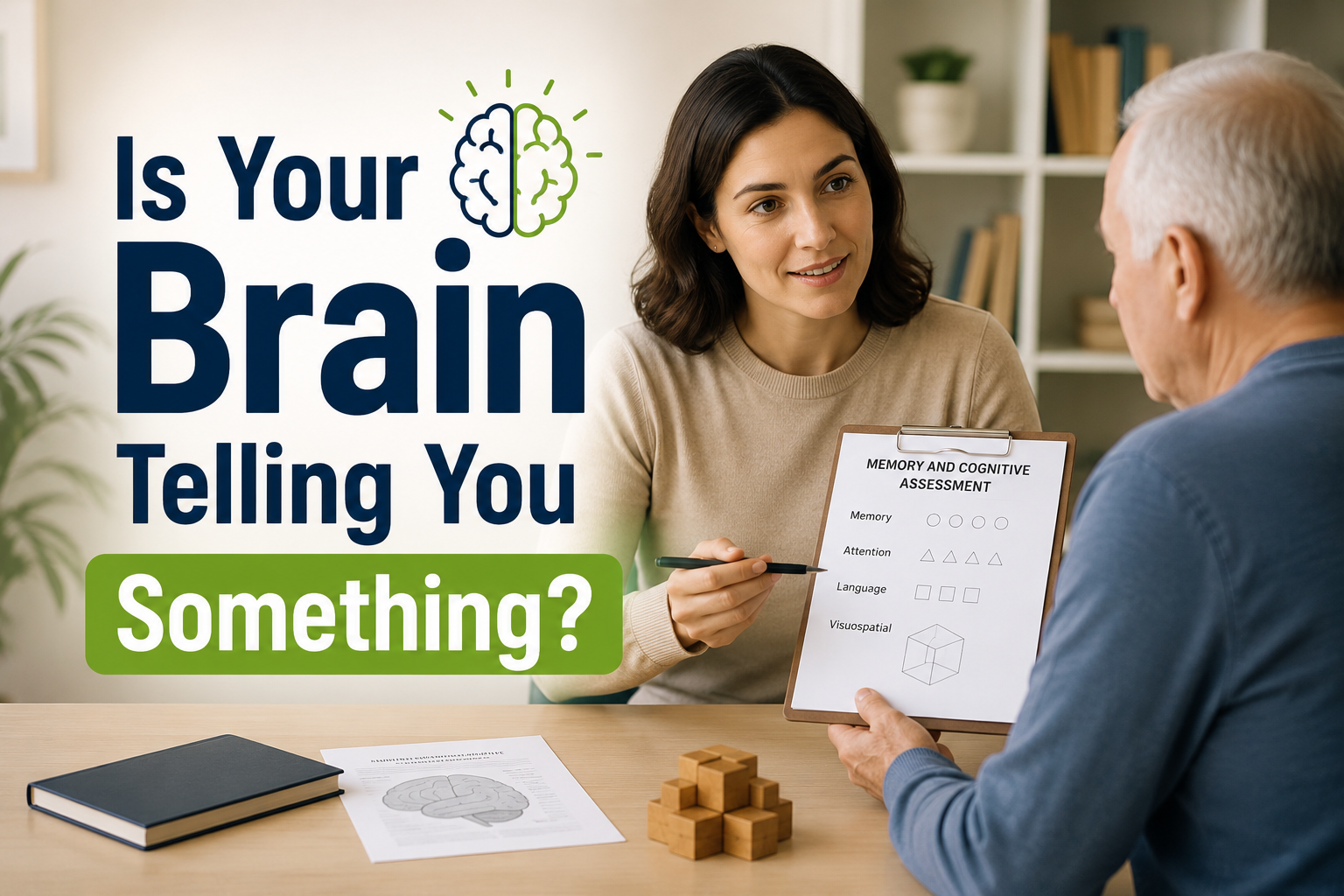
Memory lapses. Difficulty concentrating. Learning challenges. Personality changes.
When thinking, memory, or behavior begins to change, it’s natural to wonder why. Neuropsychological testing helps uncover the answers by providing a detailed understanding of how the brain is functioning, helping healthcare providers make more accurate diagnoses and develop personalized treatment plans.
What is Neuropsychological Testing?
Neuropsychological testing is a comprehensive evaluation of cognitive, behavioral, and emotional functioning using standardized, evidence-based assessments. These evaluations help identify how different areas of the brain are functioning, including memory, attention, language, problem-solving, processing speed, executive functioning, and emotional regulation.
It is conducted to evaluate brain function when there are symptoms of psychological and neurological conditions that affect memory, thinking, language, or behavior. It reveals a person’s cognitive strengths and weaknesses and also measures thinking skills, academic ability, motor skills, social skills, behavior, and emotional functioning.
Harmony United Psychiatric Care is a premier mental health clinic serving communities across Florida.
Find a provider near you
Signs That Neuropsychological Testing May Be Needed
There are several situations in which a healthcare provider may recommend neuropsychological testing. Common signs include:
- Memory Problems: Frequently forgetting things, asking the same questions repeatedly, or having trouble remembering important information.
- Difficulty Concentrating: Struggling to stay focused, pay attention, or complete tasks at work, school, or home.
- Changes in Thinking Skills: Having trouble making decisions, staying organized, planning activities, or solving everyday problems.
- Learning and Academic Challenges: Difficulties with reading, writing, math, learning new information, or keeping up with schoolwork.
- Behavioral or Emotional Changes: Noticeable changes in mood, personality, behavior, or the ability to manage emotions.
- Difficulty Planning: Having trouble creating plans, setting goals, or following multi-step activities.
- Organization Challenges: Finding it difficult to keep track of belongings, manage information, or stay organized.
- Time Management Difficulties: Struggling to estimate time, meet deadlines, or complete tasks on schedule.
- Difficulty Prioritizing Tasks: Feeling overwhelmed when deciding what to do first or managing multiple responsibilities at once.
Medical Conditions Commonly Evaluated
Healthcare providers often recommend neuropsychological testing when certain medical or neurological conditions are present.
- Suspected Dementia: Memory loss, confusion, or noticeable changes in thinking that may need further evaluation.
- Traumatic Brain Injury: Difficulties with memory, attention, thinking, or emotions following an accident or brain injury.
- Stroke Recovery: Cognitive changes after a stroke that may affect memory, language, attention, or problem-solving skills.
- Neurological Disorders: Conditions such as epilepsy, Parkinson’s disease, or multiple sclerosis that can impact brain function and cognitive abilities.
- Attention-Deficit/Hyperactivity Disorder (ADHD): Identifying attention, executive functioning, and processing challenges to support accurate diagnosis and treatment planning.
- Autism Spectrum Disorder (ASD): Evaluating cognitive, social, communication, and behavioral strengths and challenges to guide personalized support and care.
Neuropsychological Testing for Children and Adolescents
Children may be referred for neuropsychological testing if they have difficulties with attention, learning, language development, social skills, emotional control, or problem-solving. These challenges may be noticed by parents, teachers, or healthcare providers. Testing helps identify the underlying causes and provides recommendations to support the child’s success at home, school, and in daily life.
Benefits of Early Evaluation
Early evaluation often leads to earlier intervention, more targeted treatment, and better long-term outcomes.
- Early testing can help identify cognitive concerns before they become more serious.
- It provides a more accurate understanding of the underlying condition and its impact on daily life.
- The results can help healthcare providers create personalized treatment and support plans.
- Students and employees may receive appropriate accommodations to help them succeed in school or the workplace.
- Testing helps guide more effective treatment planning and long-term care decisions.
- It can improve the overall quality of life for individuals and provide valuable support and guidance for families.

What to Expect During Testing
A neuropsychological evaluation typically includes an interview, a review of medical history, and a series of tasks designed to assess different cognitive abilities.
Depending on the individual’s needs, testing may take several hours and may be completed in one or multiple sessions. The process is non-invasive and tailored to the person’s age, concerns, and medical background. There are no needles, scans, or invasive procedures. Most testing involves answering questions, solving problems, remembering information, and completing paper-and-pencil or computerized tasks.
After testing, the neuropsychologist analyzes the results and provides a detailed report with findings and treatment recommendations.
Taking the Next Step
Changes in memory, attention, learning, behavior, or thinking can affect every aspect of life. While these symptoms may have many possible causes, understanding what is happening is the first step toward finding effective solutions.
Neuropsychological testing helps healthcare providers better understand how a person’s brain is functioning. The results can help individuals, families, and providers choose the right treatment, support, and care plan. If you or a loved one is having ongoing problems with memory, thinking, learning, or behavior, a professional evaluation can help identify the cause and guide the next steps.
Whether you’re a parent worried about your child’s development, an adult facing memory changes, a patient recovering from injury, or someone who has spent years searching for a diagnosis that fits, neuropsychological testing could be the answer you’ve been looking for.
Neuropsychological testing doesn’t simply identify problems; it provides answers. Whether you’re seeking clarity for yourself, your child, or a loved one, understanding how the brain is functioning is often the first step toward more effective treatment and better long-term outcomes.
Harmony United Psychiatric Care offers neuropsychological testing services across multiple locations in Florida. To schedule an evaluation or speak with a provider, call us at (800) 457-4573 or book an appointment online.
Frequently Asked Questions
Neuropsychological testing helps evaluate how the brain is functioning. It assesses areas such as memory, attention, language, problem-solving, learning, and emotional functioning to identify cognitive strengths and challenges.
The length of testing varies depending on the individual’s needs and the reason for evaluation. Most evaluations take several hours and may be completed in one session or across multiple appointments.
Children, adolescents, adults, and older adults may benefit from testing if they experience memory problems, learning difficulties, attention issues, behavioral changes, neurological conditions, or cognitive concerns after an injury or illness.
No. Neuropsychological testing is completely non-invasive. It involves answering questions and completing tasks that measure different aspects of thinking, memory, language, and problem-solving abilities.
Neuropsychological testing is an important tool for evaluating memory and cognitive changes associated with dementia. While it is often used as part of the diagnostic process, results are typically reviewed alongside medical history, physical examinations, and other diagnostic tests.
The results provide detailed information about an individual’s cognitive strengths and challenges. This information helps healthcare providers develop personalized treatment plans, recommend accommodations, and identify appropriate support services.
Reference Links
https://www.psychiatrynyc.com/blog/when-should-you-seek-neuropsychological-testing/
https://www.mhealthfairview.org/service/neuropsychological-testing
https://www.pennmedicine.org/treatments/neuropsychological-testing
Leave a Reply