
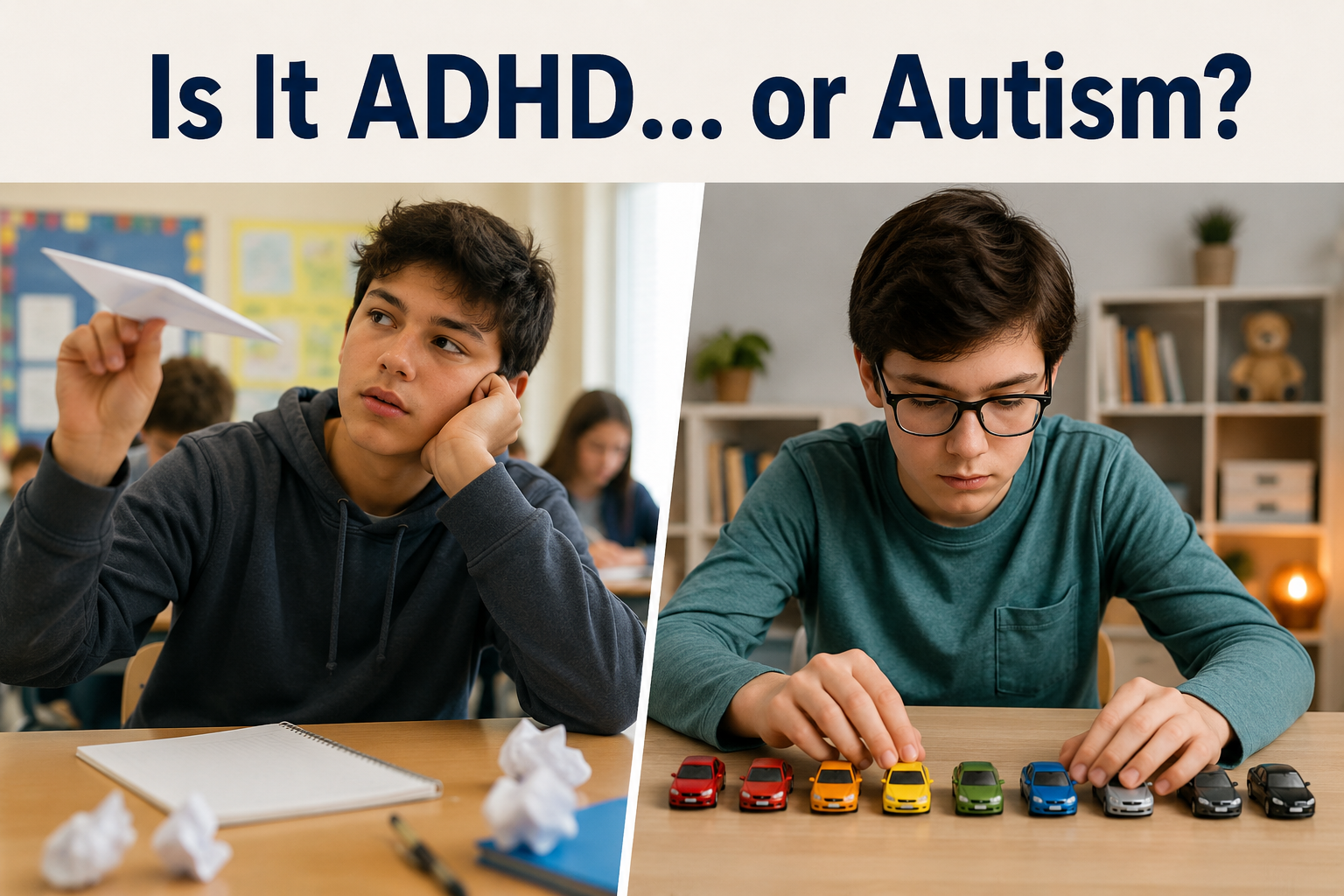
ADHD and Autism Spectrum Disorder (ASD) are often discussed together because they can share similar traits, but they are not the same condition. Difficulty paying attention, social challenges, emotional regulation, and executive functioning problems can occur in both, making it difficult to tell them apart. Understanding the similarities and differences is the first step toward finding the right evaluation, support, and treatment.
What Are ADHD and Autism?
Attention-Deficit/Hyperactivity Disorder (ADHD) is a neurodevelopmental condition that affects attention, impulse control, activity level, and executive functioning.
Autism Spectrum Disorder (ASD) is a neurodevelopmental condition that affects social communication, behavior, sensory processing, and patterns of interests and activities. People with autism may find social situations challenging, prefer predictable routines, or have deep interests in specific topics. They may also be more sensitive to sounds, lights, textures, or other sensory experiences.
Both ADHD and autism usually begin in childhood, but many people are not diagnosed until adolescence or adulthood.
Harmony United Psychiatric Care is a premier mental health clinic serving communities across Florida.
Find a provider near you
How Are ADHD and Autism Similar?
Although ADHD and autism are different conditions, they can look alike in some ways. Both can affect daily life, relationships, school, and work.
- Social Struggles: Both can make it hard to interact with other people. You might have trouble making friends or understanding what others are thinking or feeling.
- Focus Problems: Both conditions can make it difficult to concentrate. Whether it’s homework, a conversation, or a game, paying attention can be challenging.
- Executive Function Challenges: This fancy term just means planning, organizing, and completing tasks. People with either condition might struggle to remember steps in a process or manage their time.
- Big Emotions: People with ADHD or autism often feel things strongly, be it happiness, anger, or worry. These feelings can sometimes become overwhelming.
- Sensory Sensitivities: Some individuals with ADHD or autism may be sensitive to sounds, lights, textures, or other sensory experiences, although this tends to be more common and pronounced in autism.
ADHD vs. Autism: What Are the Differences?
While the two conditions share some characteristics, the reasons behind those behaviors are often different.
| Characteristic | ADHD | Autism (ASD) |
| Social Interaction | May interrupt conversations, talk excessively, or act impulsively in social situations. | May have difficulty understanding social cues, maintaining eye contact, or knowing how to respond in conversations. |
| Interests and Hobbies | Often enjoys trying new activities and may quickly lose interest before moving on to something else. | May develop deep, long-lasting interests in specific topics or activities. |
| Attention Style | Easily distracted and may struggle to focus on less interesting tasks but can hyperfocus on activities they enjoy. | Can stay intensely focused on preferred interests but may find it difficult to shift attention to other tasks. |
| Need for Routine | Usually prefers variety and may become bored with repetitive routines. | Often feels more comfortable with predictable routines and may become distressed by unexpected changes. |
| Movement and Behavior | May fidget, tap, squirm, or have difficulty sitting still due to hyperactivity. | May engage in repetitive movements, such as rocking, hand-flapping, or spinning, to self-regulate or cope with sensory input. |
Sensory Processing | May experience sensory sensitivities but usually less consistently. | Sensory sensitivities are common and often significantly affect daily life. |
For example, a child with ADHD may interrupt conversations because they act before thinking. A child with autism may speak less during conversations or have difficulty understanding facial expressions, body language, or when it’s their turn to talk. While these behaviors may seem similar on the surface, they happen for different reasons.
It’s also important to remember that every person is unique. Not everyone with it or autism will experience the same symptoms.

Can Someone Have ADHD and Autism Both?
Yes. A person can have both ADHD and autism at the same time. In fact, it’s fairly common for these conditions to occur together. When this happens, the combination of symptoms may affect learning, relationships, emotional regulation, and daily activities in different ways. Although “AuDHD” isn’t a medical diagnosis, it’s commonly used to describe people diagnosed with both ADHD and autism
Many people share characteristics of both ADHD and autism. Because symptoms often overlap, it’s difficult, and sometimes impossible, to distinguish between the two without a comprehensive evaluation.
A comprehensive evaluation can help determine whether one or both conditions are present and guide the development of the most effective treatment plan.
When Should You Seek Professional Help?
If you’re noticing ongoing challenges with attention, communication, emotions, or daily functioning, it may help to speak with a professional for guidance on next steps. Understanding symptoms like ADHD or autism can be confusing, especially when they overlap.
At Harmony United Psychiatric Care, we provide comprehensive psychological and neuropsychological evaluations, neurodevelopmental testing, and personalized care for children, teens, and adults. We offer both in-clinic visits and online telepsychiatry, along with assessments, therapy, and medication management, making care more accessible and convenient for individuals and families.
Reach out to us by calling (800) 457- 4573 or by requesting an appointment online.
Final Thoughts
ADHD and autism share several similarities, but they are not the same condition. Understanding their differences can help you recognize when it’s time to seek professional guidance and support.
With an accurate diagnosis and personalized treatment plan, children, teens, and adults can better understand their strengths, develop effective coping strategies, and thrive at home, school, work, and in their relationships.
Frequently Asked Questions
No, ADHD and autism are not the same condition. They are both neurodevelopmental, but they affect the brain in different ways. ADHD mainly impacts attention, impulse control, and activity levels, while autism affects communication, social interaction, and behavior patterns. Even though they can look similar in some situations, they are separate conditions with different needs, treatment, therapy, and support approaches.
They get confused because they share some similar signs. For example, both can involve difficulty focusing, emotional ups and downs, and challenges in social situations. On the surface, these behaviors may look alike, but the reasons behind them are different. That’s why a professional evaluation is important to understand what’s really going on.
Yes, it’s possible to have both ADHD and autism at the same time. This is sometimes called a co-occurring diagnosis. When both conditions are present, a person may experience a mix of symptoms that affect attention, communication, emotions, and daily routines. A proper assessment can help create a care plan that fits the individual’s specific needs.
Both ADHD and autism usually begin in early childhood, but the signs may not always be noticed right away. Some children are diagnosed early, while others may not receive a diagnosis until their teenage years or even adulthood. It often depends on how noticeable the symptoms are and how they affect daily life.
If you or your child is regularly struggling with focus, communication, emotional regulation, or daily functioning, it may be a good idea to seek an evaluation. You don’t need to wait until things become severe. Getting clarity early can make it easier to understand what kind of support will help most.
A professional evaluation usually involves a detailed conversation about symptoms, developmental history, and daily challenges. The clinician may also use questionnaires or assessments to better understand behavior patterns. The goal is not just to give a label, but to understand the person fully so the right support and treatment plan can be recommended.
Reference Links
https://pmc.ncbi.nlm.nih.gov/articles/PMC10983102
https://www.webmd.com/add-adhd/childhood-adhd/adhd-or-autism
https://health.clevelandclinic.org/adhd-vs-autism
https://behavioral-innovations.com/blog/autism-adhd-and-audhd-explained
Leave a Reply