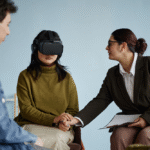


Imagine stepping into a safe, completely controlled world where you can finally face your deepest fears and most painful memories. That’s not science fiction, it’s Virtual Reality Therapy (VRT), and it’s transforming how clinicians treat Trauma, PTSD, and Anxiety Disorders.
At the heart of this revolution is Virtual Reality Exposure Therapy (VRET). For people living with the heavy burden of Post-Traumatic Stress Disorder (PTSD) or debilitating anxiety, VRET offers a powerful new path forward.
What is Virtual Reality Exposure Therapy?
Think of VRET as a supercharged version of classic exposure therapy. Instead of just trying to imagine a scary situation or relying on verbal descriptions, you put on a VR headset and are instantly transported into a lifelike, 3D scenario that mirrors your trauma or phobia.
It’s completely immersive. You’re not just seeing the environment; you’re hearing the sounds, maybe feeling a controlled vibration, and experiencing the scenario with all your senses engaged.
- For a veteran with combat PTSD, this might mean a controlled, gradual immersion into a virtual battlefield, guided step-by-step by their Psychiatrist.
- For someone with severe social anxiety, it could be practicing a conversation in a virtual coffee shop or a crowded party without the real-world pressure.
This multi-sensory engagement allows the brain to process triggers in real time and reshape its sense of safety.
Why This Works: Real Results, Lasting Change
VRET isn’t just innovative, it’s effective. Clinical studies show significant symptom reduction studies show significant symptom reduction for PTSD, with success rates often hitting an impressive 66% to 90%. Patients aren’t just feeling better; they’re reporting long-term relief, often sustained for six months or more.
For anxiety disorders, be it a specific Phobia, panic disorder, or Social Anxiety, VRET gives therapists a superpower: the ability to perfectly customize the exposure experience. It’s often impossible to simulate a fear in real life, but in VR, the environment is created just for the patient. This systematic, tailored approach makes the process less intimidating and significantly cuts down on the number of people who quit therapy too early.
The therapeutic benefit comes from creating a corrective emotional experience. By repeatedly encountering the trauma or anxiety context in a safe setting, your brain learns, “This is uncomfortable, but I am safe. The threat is not real.” This is how fear is reduced and avoidance behaviors are finally overcome.
Harmony United Psychiatric Care is a premier mental health clinic serving communities across Florida.
Find a provider near you
RET vs Traditional Therapy: The Major Advantages
VRT isn’t trying to replace traditional therapy; it’s giving us a powerful, new tool in the toolbox. Here’s why it’s a game-changer:
- Total Control: Therapists can instantly adjust the intensity and duration of the virtual world like a dimmer switch for fear to perfectly match your current emotional state.
- Safety First: We can safely simulate impossible or dangerous real-world scenarios (like a major car accident or a combat zone) without any risk.
- Boosted Engagement: It’s tough to check out when you’re immersed! The engaging nature of VR helps reduce therapy dropouts.
- Live Tracking: Advanced systems can monitor your heart rate and other physiological responses in real-time, allowing the therapist to optimize the session moment-to-moment.
- Future Accessibility: As VR gear becomes more affordable, the potential for secure, remote sessions could bring this life-changing therapy to people who can’t leave their homes.
The Road Ahead: Challenges and Bright Future
VRET is pioneering, but it’s not without its hurdles. Things like the cost of the technology, the risk of motion sickness for some patients, and the crucial need for therapists to be expertly trained are all challenges we need to address. Also, we’re still learning how to manage the important ethical considerations around patient distress in these vivid virtual worlds.
However, the future is incredibly bright. We can expect VRET to get even smarter, with AI and biofeedback making virtual environments that literally adapt in real-time to your response.
In short, Virtual Reality Therapy is not just a trend; it’s a vital leap forward in mental health care. By empowering individuals to step into controlled, modifiable virtual experiences, VRET is enhancing the therapeutic journey beyond what was previously possible.
VRET empowers individuals to confront fear safely and gradually. It’s a meaningful leap forward in trauma and anxiety treatment, helping people reclaim confidence and reduce avoidance in the real world.
Reference Links:
https://pmc.ncbi.nlm.nih.gov/articles/PMC6713125/
https://www.xr.health/us/blog/virtual-reality-treatment-for-ptsd/
https://www.talktoangel.com/blog/role-of-virtual-reality-in-treating-ptsd-and-phobias
https://www.brainline.org/treatment-hub-treating-brain-injury-and-ptsd/virtual-reality-exposure-therapy-vret
Leave a Reply