
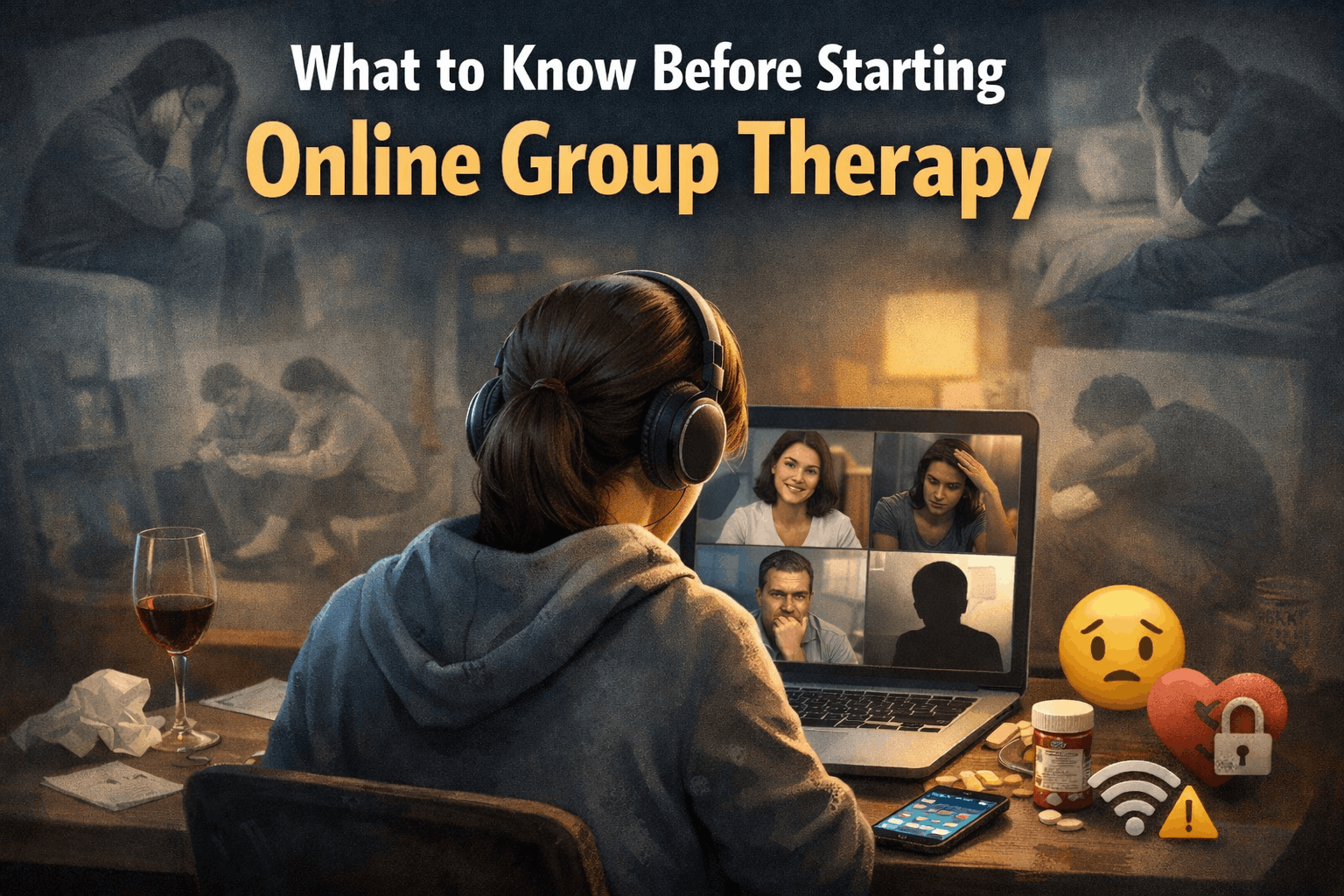
Online Group Therapy has grown rapidly in recent years, especially as Telehealth Services expand. But beyond convenience, many people wonder: Is it truly effective? And what are the real benefits and limitations?
Defining Virtual Group Therapy
Virtual Group Therapy connects a handful of participants with a qualified clinician through encrypted video calls, typically lasting 60-90 minutes, while mimicking traditional setups but swapping physical proximity for digital screens filled with participant thumbnails. Common types encompass skills-building sessions using CBT or DBT for managing anxiety, Mood Disorders, or emotional skills; peer-led circles addressing loss, substance use, PTSD, or ongoing health battles; and virtual intensive programs that pack multiple weekly hours into remote formats. While some assume online therapy is a “less effective” version of in-person care, research suggests otherwise.
Surprising Strengths You Might Miss
Emerging research consistently shows virtual group therapy matching or sometimes rivaling in-person results for common mental health concerns. Standout evidence includes a DBT-focused IOP study in which remote attendees saw dramatic drops in distress levels, on par with on-site participants; health intervention reviews confirming equivalent gains in mood stability and social wellness compared with live meetings; and recent analyses affirming that well-led online groups foster genuine bonds and lasting progress, beyond mere conversation. Additional perks shine through in accessibility, such as barrier-breaking reach for those housebound by health limits, family duties, or remote locations; tailored matching, like specialized sessions for underrepresented communities facing specific traumas; and retention boosts for introverts or those intimidated by in-room vulnerability, easing entry from familiar surroundings. Dismissing online group therapy as ineffective ignores this growing body of proof.
Harmony United Psychiatric Care is a premier mental health clinic serving communities across Florida.
Find a provider near you
Overlooked Hurdles in the Spotlight
Marketing rarely spotlights how virtual formats introduce distinct friction points not present in physical spaces. Limited visibility into full-body language can reduce the effectiveness of nonverbal communication cues.; delayed bonding, as that “us against the world” feeling builds gradually online without deliberate facilitation efforts; frequent disruptions from household noise, family intrusions, alerts, or connectivity glitches that shatter session immersion; and shared responsibility for safety, since therapists can’t enforce a controlled environment and depend on your setup for confidentiality. Clinician reports from 2021 noted strains such as Therapists must work intentionally to create emotional safety in a digital space, while later reviews emphasized bolstering emotional cues and unity online. If sessions drag or glitch awkwardly, it’s inherent to the tech, not a personal failing.
Ideal Matches and Mismatches
Not every situation suits screen-based groups; fit matters immensely. Prime candidates include those who seek structured coping strategies for everyday anxiety, low mood, or tension in a communal vibe; navigate tech smoothly with reliable privacy and bandwidth at hand; and thrive on mutual insights and stories from peers walking parallel paths. Steer clear or pair with solo care if facing imminent risks like suicidal thoughts needing immediate, tailored oversight; homes lacking seclusion, risking exposure or judgment from bystanders; or intricate issues demanding one-on-one depth before group elements. Standards from key organizations mandate thorough vetting, consent details, and crisis protocols for telehealth groups skip providers who ignore these.
Maximizing Your Virtual Group Experience
Success hinges on execution, turning potential flatness into profound impact. Seek facilitators prioritizing explicit rules covering data security, recording bans, video etiquette, outage plans, and emergency steps; unity tactics like round-robin shares, prompt rotations, and tools such as breakout chats for inclusivity; and fatigue awareness with sensible durations, pauses, and mindful emotional pacing. Your role amplifies results: honor the commitment by claiming a secluded spot, plugging in audio gear, and muting distractions; engage wholly with the camera when feasible, open sharing, and no divided attention; and speak up by sharing what connects or isolates you, refining the group’s flow. Blending expert structure, skilled guidance, and your commitment elevates online group therapy from a convenient backup to a vital lifeline for connection and growth.
Harmony United Psychiatric Care provides licensed, therapist-led online group therapy, delivering structured, evidence-based care in a secure telehealth setting. Our virtual groups are small, confidential, and guided by experienced clinicians trained in CBT and DBT-based approaches.
If you’re ready to explore online group therapy for anxiety or depression, we’re here to help.
Call (800) 457-4573 or Request An Appointment Online today. To learn more about virtual group therapy sessions, feel free to explore our Mental Health Library.
References:
https://pmc.ncbi.nlm.nih.gov/articles/PMC11579155/
https://www.i-jmr.org/2023/1/e43783
https://www.inclusivepsych.com/post/group-therapy-online-opportunities-and-challenges
https://www.apaservices.org/practice/legal/technology/group-therapy-telehealth-covid-19
Leave a Reply