
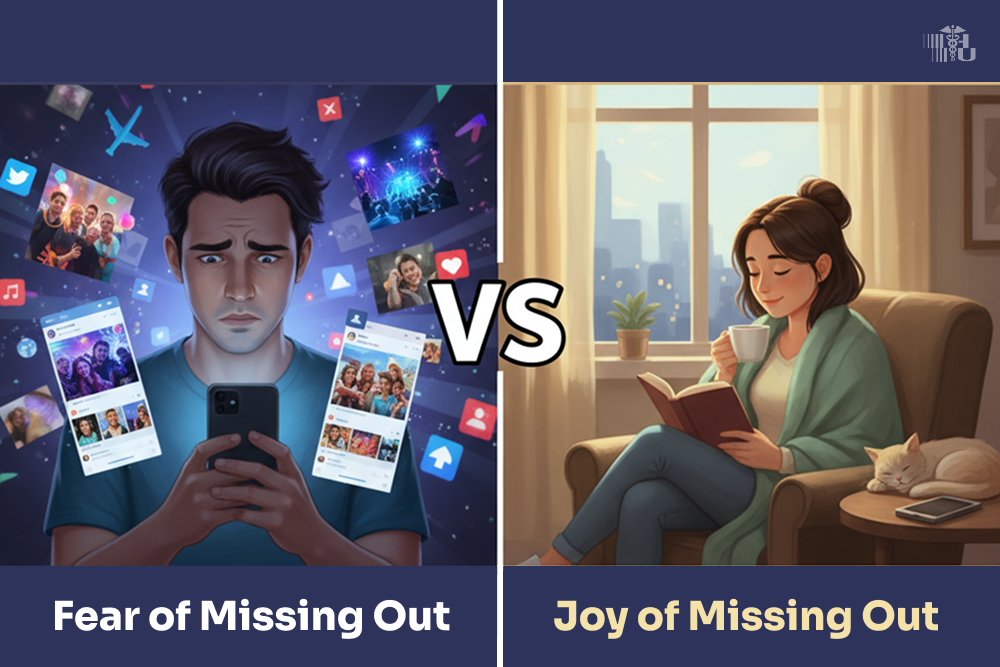
Your phone lights up again. Another ping. Another event. Another photo of someone’s life seemingly moving faster, brighter, better than yours. You scroll for a moment, maybe an hour, and somewhere between the likes and the hashtags, that quiet feeling creeps in again. “Am I missing out?”
That anxiety flutter, that whisper of comparison, has a name: FOMO, or Fear of Missing Out. It’s what keeps us refreshing feeds, comparing milestones, and wondering if everyone else is living life more fully than we are. FOMO doesn’t shout, it hums beneath the surface, disguised as curiosity but fueled by self-doubt.But what if missing out wasn’t something to fear? What if it was actually the beginning of peace? That’s where JOMO, the Joy of Missing Out, enters like a deep exhale after holding your breath too long. JOMO isn’t about detachment; it’s about freedom. It’s when you stop chasing and start being.
Today, Therapists, Psychiatrists, and Psychologists in the fields of mental health and behavioral health see FOMO and JOMO as two ends of a psychological spectrum, a reflection of how technology now shapes our emotions, focus, and sense of self.
Understanding FOMO and Its Emotional Triggers
FOMO is the uneasy feeling that others are enjoying experiences without you. It often leads to compulsively checking messages, scrolling social media late into the night, or saying yes to every plan just to stay included. From a psychiatric and behavioral health viewpoint, FOMO is closely associated with anxiety, decreased self-worth, and even depressive symptoms.
Psychologists and psychiatrists explain that the human brain is naturally social and seeks validation. Social platforms exploit this drive by rewarding engagement through likes and endless updates. Over time, this constant comparison reshapes behavior, reinforcing the idea that happiness depends on others’ approval rather than genuine satisfaction within oneself.
Individuals who visit a Mental Health Clinic Near Me often describe classic FOMO-related struggles: irritability, disrupted sleep from late-night scrolling, or difficulty being present. Therapists and mental health counselors observe that this pattern of constant stimulation can dysregulate the nervous system, mirroring stress responses often seen in burnout and social anxiety.
Harmony United Psychiatric Care is a premier mental health clinic serving communities across Florida.
Find a provider near you
How Overconnectivity Disrupts Mental Balance
Excessive digital engagement not only drains focus but also disturbs emotional stability. When people continuously view others’ highlight reels, it can blur perceptions of reality and amplify self-doubt. In psychiatry, this is seen as a form of cognitive distortion, an error in thinking that fuels unrealistic comparisons and perfectionism.
Studies in behavioral health reveal that extreme connectivity elevates cortisol (the body’s primary stress hormone) and lowers serotonin, which supports mood regulation. These physiological changes heighten the risk of anxiety, insomnia, and emotional fatigue. Growing awareness of these effects has led many people to seek mental health counseling near me or turn to Telepsychiatry for flexible, remote care.
Embracing JOMO: A Healthy Shift
JOMO, or the Joy of Missing Out, offers a mindful counterbalance. It’s about consciously stepping away from digital noise to value presence, self-reflection, and simplicity. Instead of obsessing over what’s missed, JOMO celebrates what’s meaningful.
From a psychological lens, JOMO reflects emotional regulation, the ability to control impulses, and reconnect with personal priorities. Therapists recommend setting intentional boundaries with technology and nurturing real-world moments of joy. Psychiatrists often include mindfulness and cognitive-behavioral techniques in treatment plans to help patients reduce compulsive checking behaviors.
Developing JOMO doesn’t mean abandoning technology altogether. It’s about using it with intention. Designating screen-free hours, creating gratitude rituals, or picking up hobbies that don’t involve devices can slowly retrain the brain to embrace stillness and satisfaction.
Mental Health Gains from Practicing JOMO
Transitioning from FOMO to JOMO strengthens both emotional and behavioral health. When people no longer depend on social validation, they gain confidence, calmness, and focus. Many mental health professionals report that reestablishing a balance between offline and online activities leads to improved sleep, reduced anxiety, and healthier self-esteem.
Key benefits often noted in therapy and psychiatry settings include:
- Emotional Regulation: Reduced comparison helps stabilize mood and prevent unnecessary worry.
- Improved Concentration: With fewer distractions, productivity and creativity flourish.
- Higher Self-Confidence: JOMO encourages internal validation, confidence grounded in self-worth rather than approval.
- Stronger Relationships: Genuine communication deepens when devices no longer dominate the connection.
- Lower Stress Levels: Disconnecting from constant alerts allows the body to restore natural calm.
With consistent practice, JOMO becomes more than a practice; it evolves into a lifestyle of mindful living and contentment.
Professional Support: Where Psychiatry and Therapy Intersect
Understanding and managing FOMO doesn’t have to be a solo effort. Psychiatrists and psychologists can help identify how digital patterns interact with broader emotional or behavioral concerns, such as social anxiety, ADHD, or mood instability. Treatment may include psychotherapy, Medication Management, or a blend of both approaches.
A therapist focused on behavioral health might assist clients in recognizing their emotional triggers, reframing negative thoughts, and creating digital wellness routines. For individuals who prefer privacy or flexibility, telepsychiatry offers a secure way to meet virtually with licensed psychiatrists or therapists.
Searching for a psychiatrist near me or booking an appointment with a mental health clinic near me ensures access to personalized guidance. Some clinics integrate counseling, medication management, and lifestyle education, helping clients navigate both emotional well-being and responsible technology use. These programs aim for long-term balance, teaching individuals how to enjoy technology without being consumed by it.
Daily Behavioral Techniques to Strengthen JOMO
Small, consistent behavioral changes can reshape one’s mindset over time. Therapists and psychologists recommend incorporating the following habits into daily life:
- Mindful Device Use: Take a moment to ask why you’re reaching for your phone and whether it truly aligns with your goals.
- Set Connection Windows: Establish periods to check messages and keep evenings screen-free for winding down.
- Express Through Journaling: Document thoughts about comparison or disconnection to gain clarity and self-awareness.
- Practice Gratitude: Reflect daily on accomplishments or experiences that bring real fulfillment.
- Grounding Exercises: Deep breathing, meditation, or time outdoors can help reinforce psychological balance.
- Seek Help When Needed: If managing FOMO feels overwhelming, reaching out to a psychiatrist or mental health counselor can guide recovery.
These manageable habits help rebuild self-control, peace, and fulfillment in a technology-driven environment.
Creating a Healthier Digital Relationship
Technology can connect, educate, and inspire, but without boundaries, it can also drain focus and emotional energy. The key lies in intentional engagement using devices to enhance, not control, life. Building this awareness requires recognizing triggers, structuring rest periods, and nurturing connections beyond the screen.
When digital fatigue or social comparison begins to affect emotional health, professional support makes a significant difference. Connecting with a mental health clinic near me, consulting a psychiatrist near me, or exploring telepsychiatry can provide a structured path back to emotional well-being
.JOMO is not about rejection; it is about restoration. It empowers people to value quiet moments, embrace genuine experiences, and live aligned with personal priorities. In a world that rarely pauses, choosing tranquility becomes a powerful act of self-care. True peace doesn’t come from being everywhere at once; it comes from finally being fully present right where you are.
Get Support at Harmony United Psychiatric Care
Healing from FOMO takes courage, and no young person should have to face it alone. At Harmony United Psychiatric Care, our experienced psychiatrists, psychologists, and therapists specialize in evidence-based treatments like DBT to help adolescents and young adults recover from trauma and build emotional resilience.
We offer both in-person and telepsychiatry services throughout Florida to ensure privacy, accessibility, and support wherever you are.
Call (800) 457-4573 or request an appointment online to begin your path toward lasting healing.For more information about mental health conditions, visit our Mental Health Library.
FAQ Section:
-
What is FOMO, and why does it happen?
FOMO, or the Fear of Missing Out, refers to the uneasy sense that other people are enjoying experiences you’re excluded from. It often arises from comparing yourself to others and is amplified by continuous exposure to social media updates, leading to tension, self-doubt, and a constant urge to stay connected.
-
What is JOMO, and how is it different from FOMO?
JOMO, or the Joy of Missing Out, is the mindful alternative to FOMO. Instead of feeling anxious about what others are doing, it’s about embracing the peace and satisfaction that come from being fully engaged in your own life, appreciating the present, and finding happiness on your own terms.
-
What are the psychological effects of FOMO?
FOMO can create feelings of nervousness, interfere with restful sleep, and lower one’s sense of self-value, sometimes leading to depressive moods. It is also connected to higher stress levels, emotional exhaustion, and coping habits like scrolling endlessly online or eating for comfort.
-
How does embracing JOMO improve mental well-being?
Embracing JOMO fosters better emotional balance, greater focus, and stronger self-assurance. It also deepens meaningful relationships and eases stress by encouraging people to value authentic interactions rather than persistent online activity.
-
How can I start practicing JOMO in my daily life?
Begin by limiting screen exposure, designating tech-free times, and participating in hobbies or activities that bring real enjoyment. Practice mindfulness, keep a gratitude journal, and make time for meaningful conversations with loved ones to nurture awareness and a deeper sense of satisfaction.
-
Can therapy help me shift from FOMO to JOMO?
Yes. Working with a mental health professional can help you recognize what fuels your stress, shift unhelpful thinking patterns, and build balanced habits for technology use and emotional health. This guidance is available through both face-to-face and online therapy options.
-
When should I seek support for FOMO?
If FOMO begins interfering with your job performance, personal relationships, or sleep, or causes you to adopt unhealthy coping habits, it may be time to seek guidance from a therapist or psychiatrist. Approaches like cognitive-behavioral therapy (CBT) and mindfulness-based practices have shown strong results in managing these concerns.
Reference links:
https://pmc.ncbi.nlm.nih.gov/articles/PMC8283615/
https://www.sciencedirect.com/science/article/pii/S2772503023000142
https://www.tandfonline.com/doi/full/10.1080/20590776.2025.2545254?src=
https://international.aripafi.or.id/index.php/WJILT/article/view/37
https://www.durham.ac.uk/research/current/thought-leadership/2023/03/how-to-ditch-fomo-and-foster-jomo–the-joy-of-missing-out/
Leave a Reply