

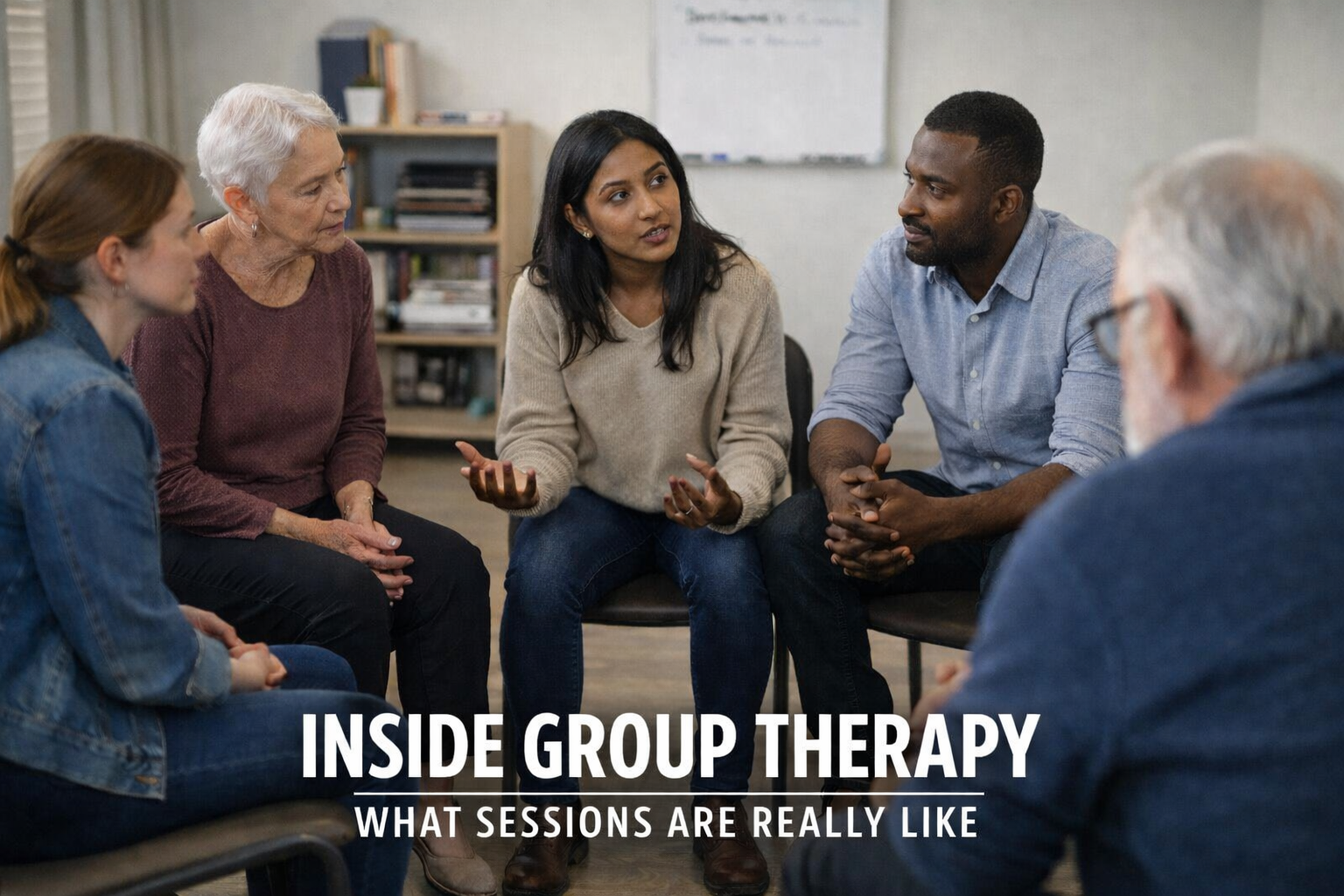
If you’ve ever wondered what Group Therapy is really like, you’re not alone. For many people, the idea of sharing personal thoughts and emotions in a group setting can feel intimidating at first.
In reality, group therapy offers a structured, supportive environment where people come together to learn, connect, and grow. Whether you’re managing anxiety, understanding what really happens in these sessions can help you approach the experience with confidence and curiosity.
The Setup: Creating a Safe Circle
Group therapy sessions are designed to feel structured, welcoming, and respectful. Chairs are typically arranged in a circle so everyone is at the same level, helping encourage openness and connection.
A licensed Therapist guides the group, and sessions last about 60-90 minutes, typically once a week. Early in each session, the therapist reviews expectations around confidentiality, respectful listening, and allowing space for everyone to participate.
It’s completely normal to feel nervous at first. Over time, many participants notice that shared experiences, supportive body language, and moments of understanding help the group feel more comfortable and grounded.
Icebreakers and Check-Ins: Breaking the Ice
Sessions usually begin with a simple check-in, where participants share how they’re feeling or reflect on their week in a few words.. There’s never any pressure to disclose more than feels comfortable.
Therapists may also use simple icebreakers, such as sharing a small positive moment or a personal goal. These exercises help build trust and reinforce that everyone is part of a supportive group environment.
It might surprise you how quickly that sense of connection grows. Hearing someone say, “I had a tough day, too,” or “I know what that feels like” helps ease the loneliness that often comes with emotional struggles.
In virtual Group Therapy sessions, typically conducted through secure video platforms, the same sense of connection and support can develop. Many participants find that joining from home helps them feel more at ease while still benefiting from group interaction.
The Heart of the Session: Sharing and Listening
As the session progresses, participants are invited to share what’s been on their mind or where they need support. Some conversations focus on daily stressors, while others explore deeper personal experiences.
A key benefit of group therapy is being heard without judgment. Participants listen to one another with empathy, often realizing they are not alone in their experiences. The therapist helps guide discussions to ensure they remain supportive, balanced, and constructive.
The Hidden Lessons in Group Dynamics
Group therapy also helps participants become more aware of interpersonal patterns. How people communicate, respond to feedback, or handle conflict in the group often reflects real-world relationships.
Therapists may gently highlight these patterns to help participants build healthier communication and relationship skills. This type of interpersonal learning can be especially helpful for individuals working through Social Anxiety, relationship challenges, or trauma-related concerns.
Coping Skills and Homework: Tools for the Real World
Therapists often introduce practical coping strategies during sessions, such as breathing exercises, grounding techniques, or communication skills. Practicing these tools as a group reinforces learning and builds confidence.
Between sessions, participants may be encouraged to apply these skills in daily life and reflect on their experiences during the next meeting.
Evidence backs it: A meta-analysis in Psychotherapy Research found group therapy to be as effective as individual therapy for depression, often with faster social gains.
Learning Skills That Last Beyond the Room
Over time, group therapy helps participants develop skills they can carry into everyday life, including emotional regulation, boundary-setting, and healthier thinking patterns. Sharing progress with the group can be motivating and reinforcing.
Why Group Therapy Works: Real Benefits and Real Talk
Research supports the effectiveness of group therapy for many Mental Health Concerns. Common benefits include:
- Increased connection and reduced isolation.
- Exposure to diverse perspectives
- Opportunities to practice communication skills.
- Greater accountability and consistency.
- Often more affordable access to care.
Group therapy may not be the right fit for everyone, and some individuals may benefit from individual therapy first. A mental health professional can help determine the most appropriate approach.
Is Group Therapy Right for You?
Group therapy may be a good fit if you’re looking for connection, shared understanding, and a supportive space to build coping and communication skills. Being open to listening, sharing, and receiving feedback can help you get the most out of the experience.
Taking That First Step
Deciding to try therapy is a personal step, and there’s no “right” way to begin. Group therapy offers an opportunity to show up as you are, learn from others, and grow together.
Many Florida-based clinics and virtual programs offer group therapy for anxiety, depression, trauma recovery, and other concerns. At Harmony United Psychiatric Care, licensed professionals guide thoughtfully structured groups designed to support connection, growth, and emotional well-being.
Reference Links:
https://www.ncbi.nlm.nih.gov/books/NBK549812/
https://www.southlake-wellness.com/post/how-to-conduct-a-group-counseling-session
https://www.sondertherapylounge.com/btc
https://www.valant.io/resources/blog/how-to-run-a-successful-group-therapy-session/
https://thetherapyroomflorida.com/beyond-the-couch-the-unique-approach-of-group-therapy/
Leave a Reply