

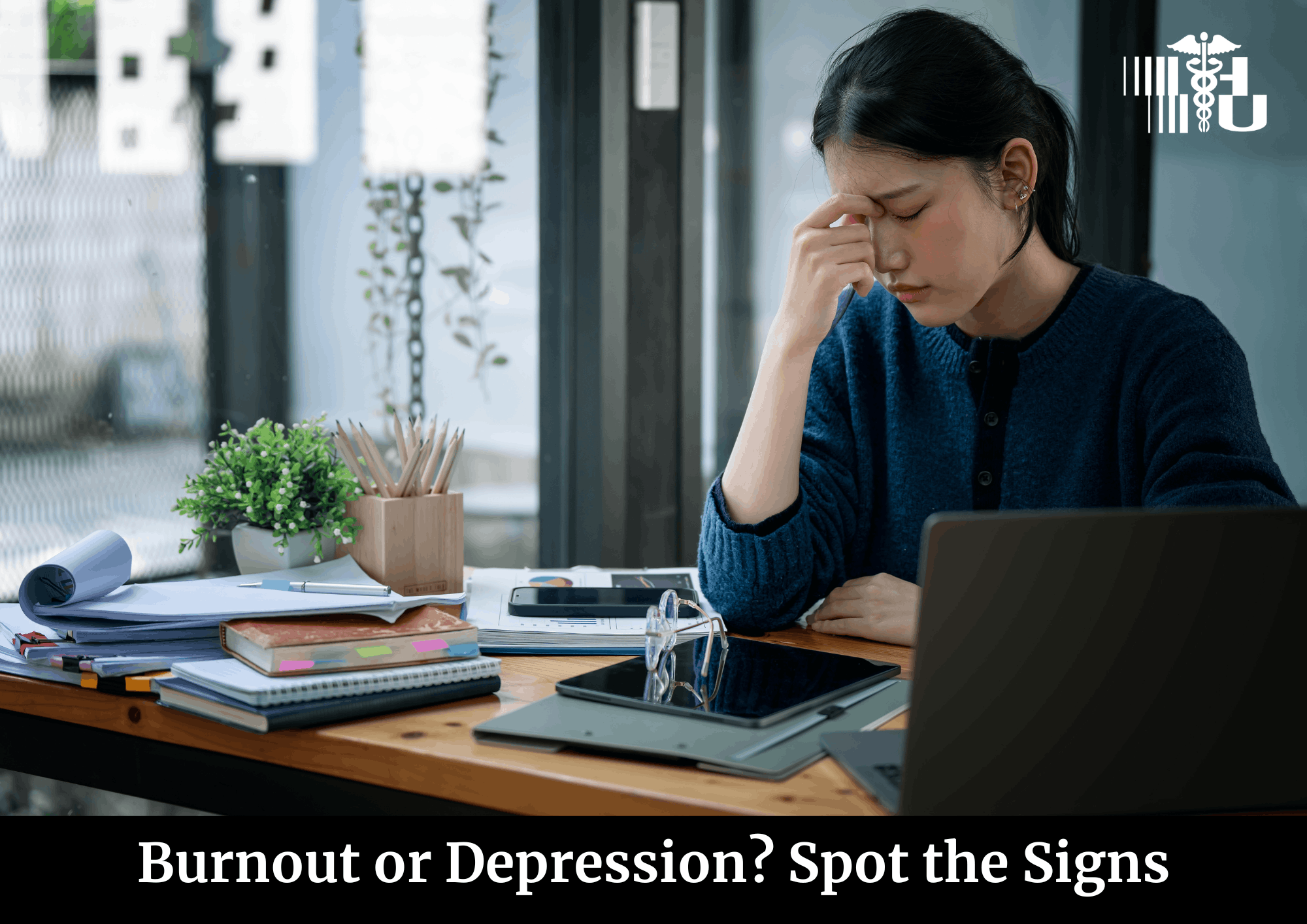
Burnout and depression often blur together, which is why so many people struggle to figure out what’s really going on with their mental health. While they can feel alike on the surface, they’re distinct experiences, and understanding the difference can help you choose the support that actually fits what you’re going through.
What Is Burnout?
Burnout is a state of emotional, physical, and mental exhaustion caused by prolonged or Chronic Stress, most often related to work or caregiving roles.
Burnout rarely happens suddenly. Instead, it tends to build gradually as responsibilities increase, boundaries fade, and rest becomes something you keep postponing.
People experiencing burnout often describe feeling like their “tank is always on empty.” You might drag yourself through the day, feel irritable with colleagues or loved ones, or struggle to care about performance or outcomes the way you used to. Emotionally, burnout can feel like going through the motions, without being truly engaged in the mind or heart.
Common signs of burnout include:
- Feeling tired all the time, even after sleep or a weekend off
- Growing cynicism, frustration, or impatience about work or obligations
- Feeling emotionally flat, numb, or disconnected from what you’re doing
- Struggling to focus, meet deadlines, or stay organized
- Physical complaints such as headaches, muscle tightness, or difficulty falling or staying asleep
What Is Depression?
Depression, also known as major depressive disorder, is a clinically recognized Mental Health Condition that can affect mood, thinking, and daily functioning.
Unlike burnout, it isn’t limited to a single role or setting, and it doesn’t always have a clear external cause, such as a stressful job or an overwhelming workload. You might have supportive relationships and a seemingly “good” life, yet still feel weighed down by a sadness or emptiness that you can’t shake.
Depression tends to seep into almost every area of life. Activities that once brought joy can feel flat or pointless, and basic tasks, such as showering, cooking, and replying to messages, can start to feel overwhelming. It’s not just tiredness or stress; it often includes a heavy emotional component, like feeling worthless, guilty, or hopeless about the future.
Common symptoms of depression include:
- Feeling sad, empty, numb, or hopeless most of the day, most days
- Losing interest in hobbies, socializing, or activities you used to enjoy
- Significant changes in appetite or weight (eating much more or much less than usual)
- Trouble sleeping or sleeping far more than usual
- Intense self‑criticism, guilt, or feelings of worthlessness
- Difficulty concentrating, slowing of thinking, or feeling mentally “foggy.”
- Thoughts that life isn’t worth living, or thoughts of self‑harm or suicide
Harmony United Psychiatric Care is a premier mental health clinic serving communities across Florida.
Find a provider near you
Burnout vs. Depression: Key Differences and Warning Signs
Because burnout and depression share overlapping symptoms such as fatigue, reduced motivation, and concentration problems, it can be easy to confuse one with the other. The key differences lie in what is driving your symptoms, where they show up most strongly, and how much of your life they touch.
Here’s a clearer way to see the contrast:
- Cause: Burnout is typically tied to ongoing external stress, such as a demanding job, caregiving responsibilities, or chronic academic pressure. When those demands lessen, symptoms often improve. Depression doesn’t always have an obvious trigger and can arise even in relatively low‑stress circumstances.
- Scope: Burnout tends to be role‑specific. You might feel awful about work but still enjoy a movie night with friends or a quiet weekend at home. Depression is more global; it affects how you feel across many areas, such as home, work, relationships, hobbies, and even your sense of self.
- Mood pattern: In burnout, your main emotional experiences may be irritability, frustration, or indifference toward tasks and responsibilities. In depression, mood is more likely to center on sadness, emptiness, or hopelessness.
- Enjoyment: If you’re burned out, you may still find pockets of pleasure when you’re away from stress, holidays, hobbies, or relaxed time with people you love. With depression, it’s common to feel disconnected from almost all sources of joy, even things you normally love.
- Energy and rest: Burnout often feels like specific demands drain your energy, and rest or time away can provide at least some relief. In depression, exhaustion tends to be more constant and doesn’t lift much, even with sleep, breaks, or vacations.
A helpful way to check in with yourself:
- If you feel awful at work but notice your mood significantly improves during weekends, holidays, or when you step away from responsibilities, burnout may be playing the leading role.
- If the heaviness, numbness, or sadness follows you everywhere into your free time, your relationships, and your hobbies, depression may be at the core.
Can Burnout Lead to Depression?
Burnout and depression are different, but they are connected in important ways. When burnout persists for a long time, and you don’t have enough support, rest, or healthy boundaries, the chronic stress can increase your risk of developing depression. It’s like repeatedly running on an empty tank: eventually, it can impact not just your energy, but your mood, self‑esteem, and overall mental health.
You might start out feeling “just burned out,” but notice over time that:
- The exhaustion spreads into your personal life, not just your job or caregiving role
- You stop enjoying things that used to help you recharge
- Your thoughts become more self‑critical or hopeless
If burnout begins to shift into a sense of worthlessness, persistent sadness, or a loss of interest in almost everything, it may be a sign that depression is developing alongside burnout. That is a crucial moment to reach out for help rather than simply pushing through.
When It’s Time to Reach Out for Help
Lifestyle changes such as getting adequate rest, setting healthier boundaries, taking breaks from screens, engaging in physical activity, and seeking social support can help reduce stress and emotional strain.
It’s especially important to seek professional support if you notice any of the following:
- You feel low, empty, or hopeless most days for at least a couple of weeks
- You’ve lost interest in activities, people, or hobbies that usually matter to you
- Your symptoms are disrupting your work, relationships, or ability to take care of daily tasks
- You have thoughts of self‑harm, wishing you wouldn’t wake up, or believing others would be better off without you
A Mental health professional can help you untangle whether you’re dealing with burnout, depression, or a combination of both. They can also collaborate with you on a treatment plan that may include therapy, changes to your routine or work environment, stress‑management strategies, and, when appropriate, medication. Getting help sooner rather than later can make recovery smoother and reduce the chances of symptoms becoming more intense over time.
If you’re struggling with burnout, depression, or persistent stress, professional support can help.
Our clinicians at Harmony United Psychiatric Care provide compassionate, evidence-based treatment for depression, anxiety, and stress-related conditions.
Call (800) 457-4573 or Request an Appointment Online
Early support can make a meaningful difference in recovery.
Reference Website:
https://altitudemindclinic.com/burnout-or-depression/
https://apibhs.com/2025/04/23/am-i-just-burned-out-or-is-it-depression
https://health.usnews.com/wellness/mind/articles/burnout-vs-depression-how-to-tell-the-difference
https://amfmtreatment.com/blog/depression-vs-burnout-main-differences-treatment-approaches/
https://eastpointbehavioralhealth.com/blog/how-to-tell-the-difference-between-burnout-and-clinical-depression/
https://justempower.me/burnout-or-depression/
Leave a Reply